LETTER TO THE EDITOR
Ending the Canadian Wheat Board monopoly brought with it significant changes in how grain growers relate to other industry participants.
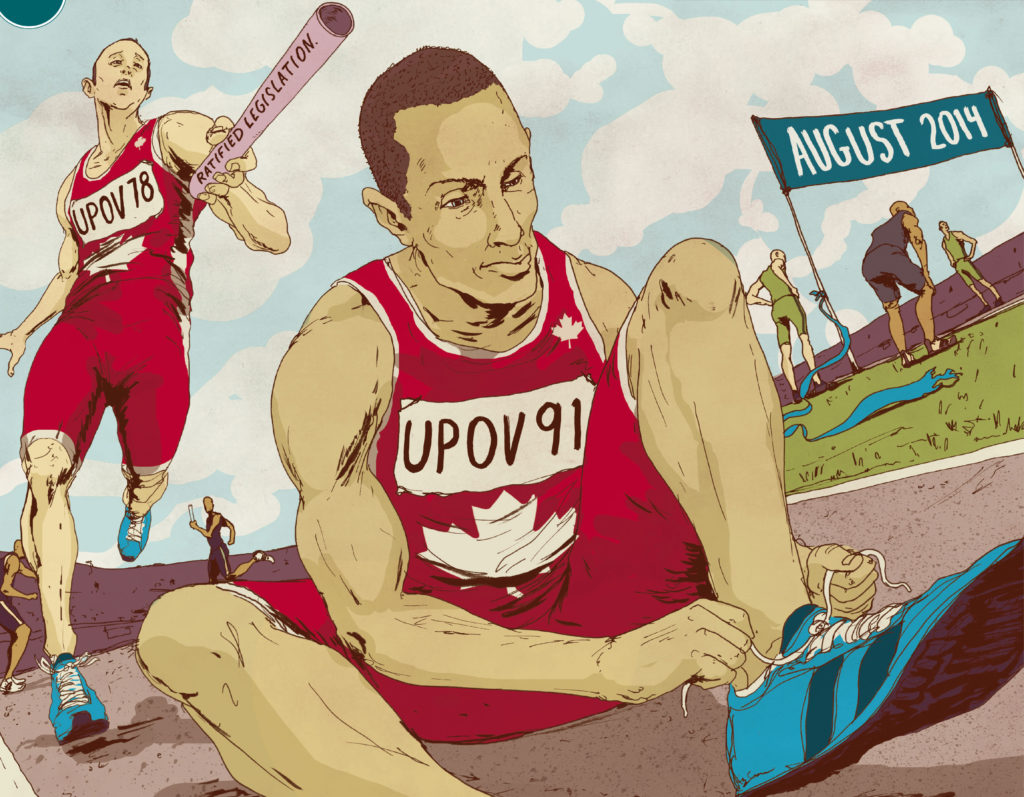
Way back in 1991, Canada joined the International Union for the Protection of New Varieties of Plants—an organization better known by its French acronym, UPOV. UPOV’s mission is to craft an international framework for plant breeders’ rights (PBR), a system to ensure those who develop new plant varieties can protect and profit from their work.
Jackson farm about 650 kilometers apart under vastly different growing conditions. Yet for the past 20 years or more, both have been committed to the concept of conservation farming.
Over a cup of coffee at Carver’s Steakhouse at the Sheraton Cavalier in Saskatoon, the city where he now lives, Bill Cooper framed his achievements in a team context. The sturdy, straight-talking 82-year-old farmer from West Bend, SK, is interim chair of the Saskatchewan Barley Development Commission (SBDC), serves on the Barley Council of Canada, and operates Farm West Management Inc., his own agricultural accounting service and consultancy.
My first cellphone was a Motorola bag phone, and when I first hoisted that puppy into my tractor back in the ’90s, I was pretty sure it represented the pinnacle of modern communication. It weighed about five pounds, was the size of a breadbox, and had enough wattage to double as an arc welder.
There’s a poem called “Silos,” by former U.S. poet laureate Rita Dove. It ends: “They were masculine toys. They were tall wishes. They were the ribs of the modern world.”
Canada has developed a brand of its own when it comes to Canadian agricultural products. People around the world who eat anything labelled “Product of Canada” know they are getting a quality product. That label is sought out at grocery stores both here in Canada and worldwide.
Looking back on the 2013 harvest, we can summarize the year’s dominant theme in one word: replenishment. In 2012, once-a-decade weather aberrations in all of the major growing regions created extremely tight carryovers headed into 2013. Prices rose to levels unprecedented in recent decades. For grain, pulse and oilseed growers, it all translated into a comparatively easy period of doing business. It was the proto-typical “seller’s market.”
According to Canada’s minister of international trade, cohesiveness among stakeholders is the key that unlocked this country’s successful position in the Canada–European Union Comprehensive Economic Trade Agreement (CETA).
Wheat is Canada’S major commodity crop, and one of the most popular food crops in the world—yet for the last 20 years, research has lagged and production has decreased. A new research alliance is bringing together some of the superpowers in Canadian genetic research and cereal development to fill the gap and ensure future competitiveness of Canadian wheat farmers.