



CN AND PORT OF VANCOUVER COMMIT TO CRITICAL RAIL CORRIDOR UPGRADES
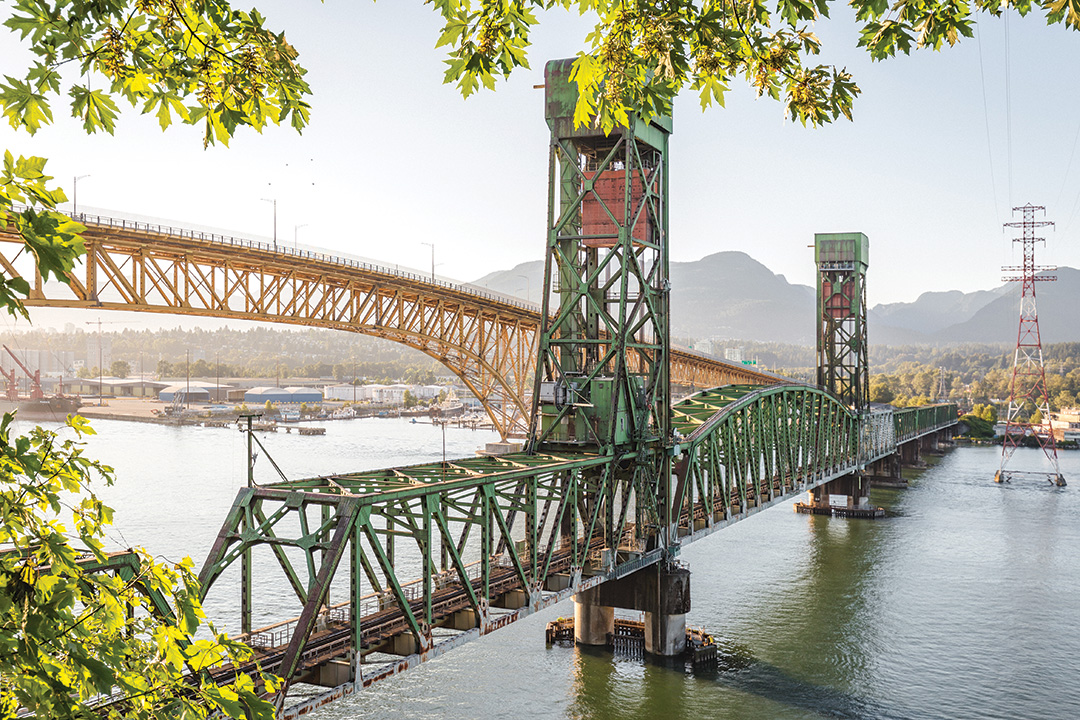
Approximately a third of cargo handled by the Port of Vancouver, including most Prairie grain exports, crosses the Second Narrows Rail Bridge owned by Canadian National Railway. A vertical-lift bridge, it is raised for boat traffic, which regularly halts rail passage. As port capacity increases, this pinch point poses greater concern.
The federal government has launched its Port of Vancouver Gateway Strategy in July to strengthen export infrastructure and double non-U.S. exports by 2035. Grain Growers of Canada applauds this, but has called for “investments in rail, including the Second Narrows rail crossing” that match the expansion of port capacity on the West Coast.
Through vessel management and scheduling as well as improvement of adjacent infrastructure, CN and the Port have collaborated to accommodate this limitation and improve safety for trains and vessels that traverse Burrard Inlet. “This includes ongoing collaboration … and data sharing to identify opportunities to optimize movements through this critical trade corridor,” said Ashley Michnowski, a CN spokesperson.
The Port’s Active Vessel Traffic Management program and centralized scheduling system was launched in 2021, which has increased the weekly number of train crossings. This fall, the Vancouver Fraser Port Authority in partnership with the City of Burnaby and CN, is expected to complete the Holdom Overpass Project. This parcel of road and rail upgrades will further enhance rail capacity and efficiency.
CN has also undertaken multiple infrastructure projects further out from the Port and has committed to pursue upgrades in the North Shore corridor. This may include rail infrastructure projects such as track and switching upgrades to increase speed of trains. “Investments … could include strengthening and upgrading the Second Narrows Rail Bridge through structural enhancements, control system upgrades, backup operating systems and marine vessel protection measures,” said Michnowski. “These would help build additional capacity and resilience into a critical corridor connecting Canadian exporters, including grain producers, to global markets.”

Comments