



FROM OCEAN TO FARM
BY SCOTT MEEBERG • PHOTO COURTESY OF OLDS COLLEGE
Researchers from the Olds College Centre for Innovation (OCCI) carried out trials to evaluate the effectiveness of seaweed products as an additive to cattle feed and are now studying its use as crop biostimulants. Funded in part by Emissions Reduction Alberta, these applied research projects explore how seaweed products can potentially reduce costs, optimize inputs and improve plant and animal growth and health.
LIVESTOCK RESEARCH
Led by Yaogeng Lei, research scientist at the Olds College Technology Access Centre for Livestock Production, the project team completed a two-stage trial that evaluated a sugar kelp byproduct as a supplement in beef cattle feed. The seaweed is sustainably grown along the Saanich Peninsula on Vancouver Island by Cascadia Seaweed of Sidney, B.C.
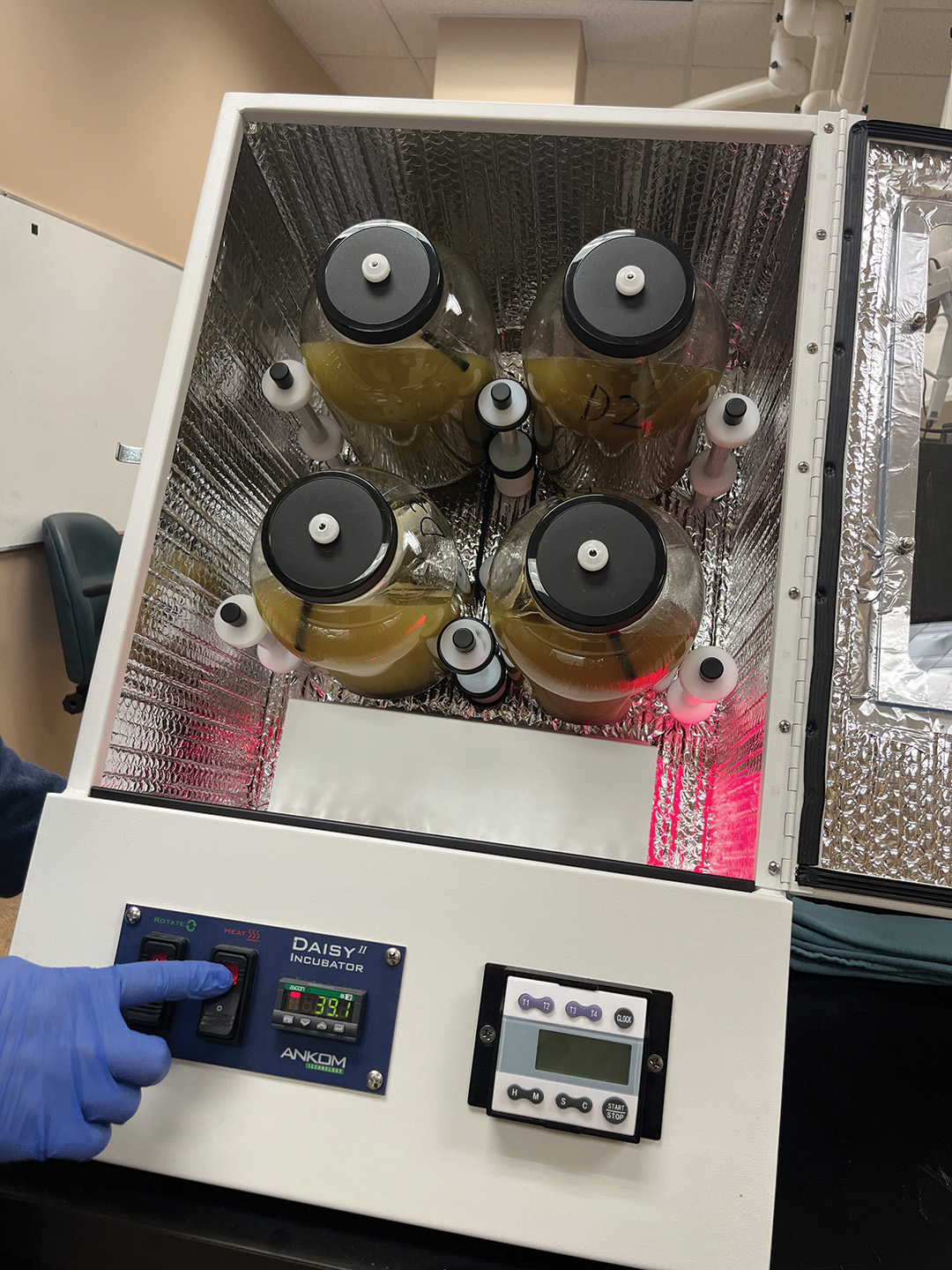
In the first stage, researchers conducted an in vitro laboratory study to evaluate the effect of seaweed on rumen fermentation. This was done with the aid of an artificial digestive system that replicates the conditions in a cow’s rumen with the use of actual rumen fluid with artificial saliva. The team evaluated seaweed inclusion rates that ranged from 0.5 per cent up to five per cent of feed. They measured key metrics such as nutrient digestibility, volatile fatty acids and ammonia production. Initial laboratory results confirmed no negative effects on rumen fermentation.
The project advanced to a live animal feeding trial at a safe one per cent inclusion rate. The trial yielded positive behavioural and nutritional outcomes. The cattle accepted the diet without negative impacts on feeding behaviour, daily activity or weight gain.
A methane-emissions trial was conducted using GreenFeed equipment, a system used to capture and measure a range of greenhouse gases produced by individual animals. The narrow trough-like unit dispenses feed. As a cow eats, its breath is drawn into a vacuum system for analysis. The collected data indicated no significant difference in emissions. The seaweed-fed cattle also achieved higher digestibility of dry matter and starch, which indicated improved nutrient utilization. As well, testing revealed higher white blood cell counts in cattle that received the seaweed mix. This indicated proactive benefits to the cows’ immune systems.
CROP RESEARCH
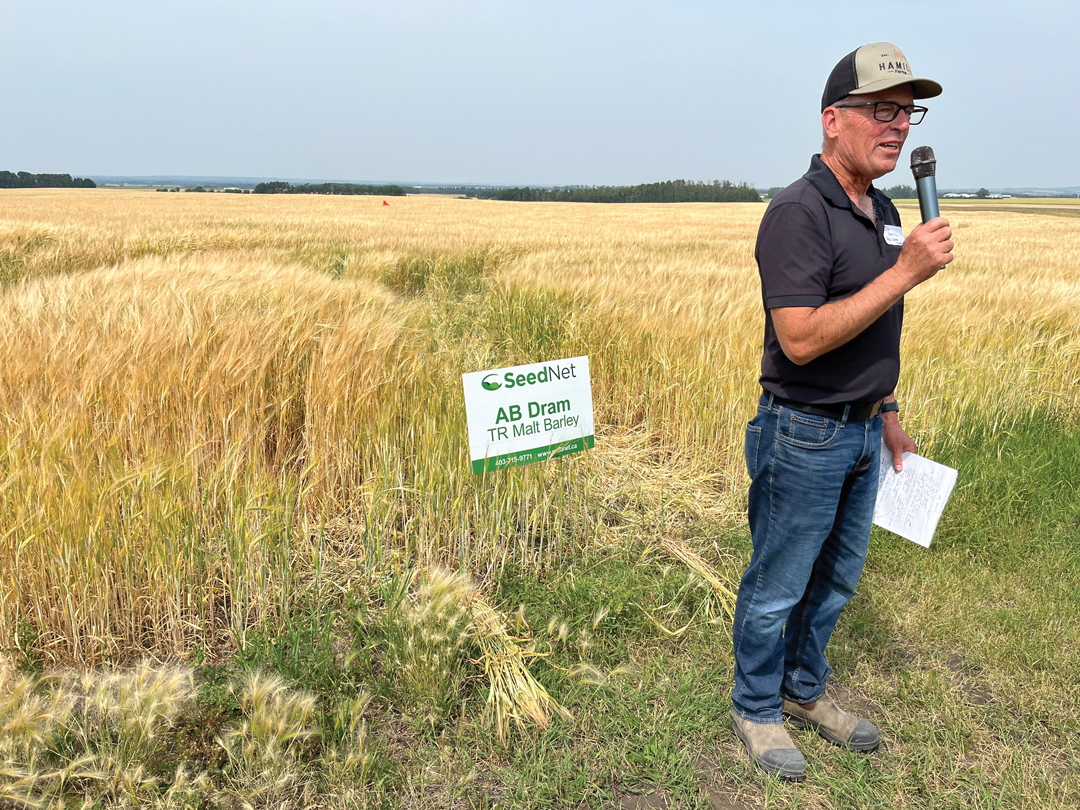
OCCI’s crop research team, led by Shabeg Briar, is also exploring how seaweed may enhance crop production. Kelpivex liquid kelp extract and RegenaKelp biostimulant from Cascadia Seaweed are being applied to barley, canola and wheat. As synthetic fertilizer and input costs remain high, Alberta’s farmers seek sustainable methods to maintain crop yield while lowering input expenses. Seaweed-based biostimulants offer the promise of a natural mechanism to enhance plant nutrient uptake efficiency and improve health and productivity.
Initial findings from the crop project indicate plants treated with the two seaweed products can maintain or even exceed standard yields while they utilize up to 30 per cent less synthetic fertilizer. Beyond grain yield performance, the project is validating real-world application methods by testing tank-mix compatibility under field conditions. This will ensure these marine biostimulants can be seamlessly integrated into standard farming practices alongside common herbicides and fungicides.
Whether applied to field crops or blended into cattle feed, the OCCI seaweed experiments demonstrate the potential power of these alternative solutions. By using ocean-cultivated seaweed as agricultural inputs, farmers could gain sustainable solutions to enhance feed digestibility, improve crop yield and lower reliance on synthetic inputs.
Scott Meeberg is the communications lead for research at Olds College of Agriculture & Technology.
Comments