



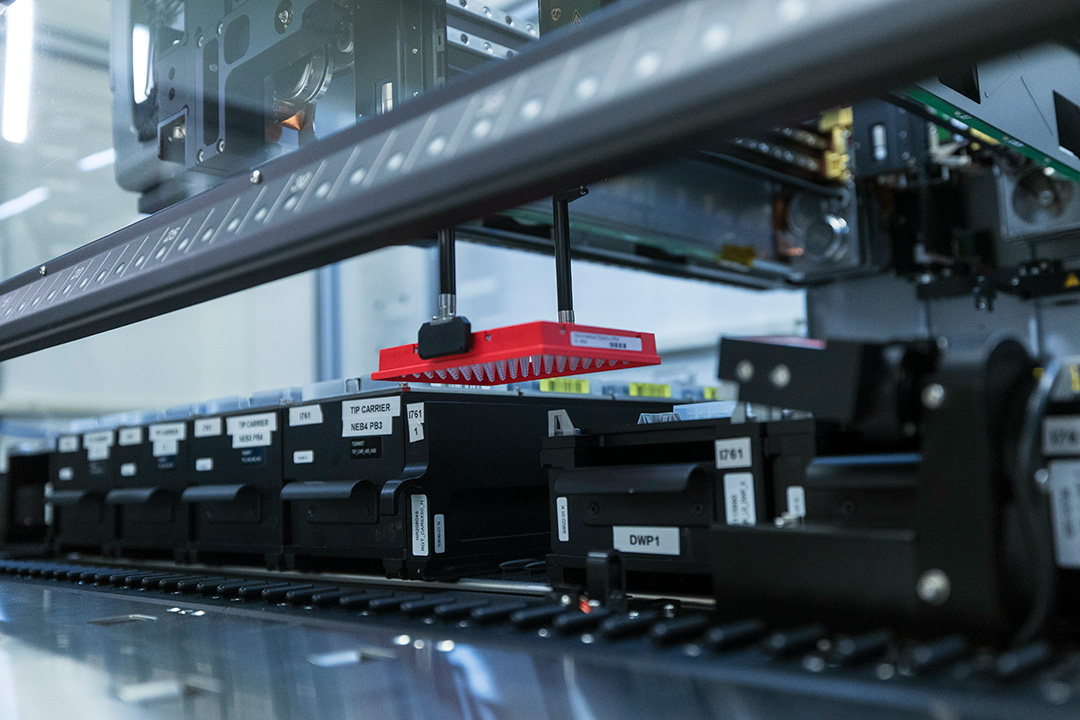
THE SEARCH FOR FUTURE BARLEY STARS
BY GEOFF GEDDES • PHOTO COURTESY OF GLOBAL INSTITUTE FOR FOOD SECURITY
The only option to stay on top as the world’s best barley producing country is to continually improve. This was the thinking behind a three-year research project launched in spring 2025 by the Global Institute for Food Security (GIFS). The core goals are to use genomic selection to enhance traits such as disease resistance, lodging and yield while boosting breeding efficiency in feed barley variety development.
The project is led by Wendy Lyzenga, a senior research scientist at GIFS. She leads initiatives that support sustainable agriculture. GIFS is conducting the project in partnership with Western Crop Innovations, and funding is provided by Alberta Beef, Alberta Grains, SaskBarley and RDAR.
Genomic selection helps predict the best performing barley plants based on DNA. This enables breeders to make selections earlier and speed up the development of improved varieties. “Genomic selection is like NHL scouting for plants,” said Jason Reinheimer, CEO of GIFS. “Instead of waiting years to see which prospect becomes a star, researchers use genetic information to identify future barley stars earlier.”
With traditional breeding, which does not incorporate genomic selection, scientists use a lengthy and costly field testing phase to pinpoint these top performers. “Traditional breeding selects plants based on how they look and perform in the field, such as yield, disease resistance or maturity, and then crosses the best plants over several generations,” said Lyzenga. The process can take 10 years to produce a farm-ready variety.
Through genomic selection and mathematical models, Reinheimer noted scientists can make predictions in the first year of the breeding cycle about which lines will “lead the pack.” This means the genetics of these early lines are reasonably strong in several aspects.
“To ensure success, scientists require huge volumes of historical data on key barley traits such as high yield and disease resistance, as well as genomic data,” said Lyzenga. “What combinations of data are associated with the best and highest yielding lines? This data can then be used to spot these lines early in the process of generating new lines.”
While the process of genomic selection is complex, the goal is simple: Quickly single out the lines that will most benefit farmers and get them to the field as soon as possible. “In the first year we have gathered considerable data from our field trials and from plant genes to start building a mathematical model that can make these predictions on how varieties will perform in the future,” said Reinheimer. “We are now seeking to accelerate variety development further by gathering even more data over the next two years of field trials.”
“Our research committee reviews all the research project submissions and chooses to fund ones like this that will have an impact for our farmers,” said Tasha Alexander, Region 6 director for Alberta Grains. “These types of studies use new techniques for breeding that can be instrumental in breeding efficiency, as well as increased yield, disease and lodging resistance. Research we invest in today will have an impact for both this generation of farmers and the ones that follow.”

Comments