



BIOLOGICALS ON THE RISE
BY TREVOR BACQUE • PHOTOS COURTESY OF EMBRAPA
Broadacre agriculture is synonymous with synthetic fertilizer. It’s the primary ingredient to a top crop and virtually all farmers use it. Canola, corn, soybeans and wheat all love a healthy dose of the critical input throughout the growing season, so to abandon its use sounds far-fetched. However, research suggests change is afoot, albeit not in Canada. Yet.
In Brazil, the world’s No. 1 soybean producer since 2018, use of nitrogen fertilizer has historically been non-negotiable. However, one determined scientist has challenged this status quo for 43 years and counting. Her research has led her country’s farmers to embrace nitrogen-fixing bacteria, or biological microbial inoculants, as their primary source of nitrogen.
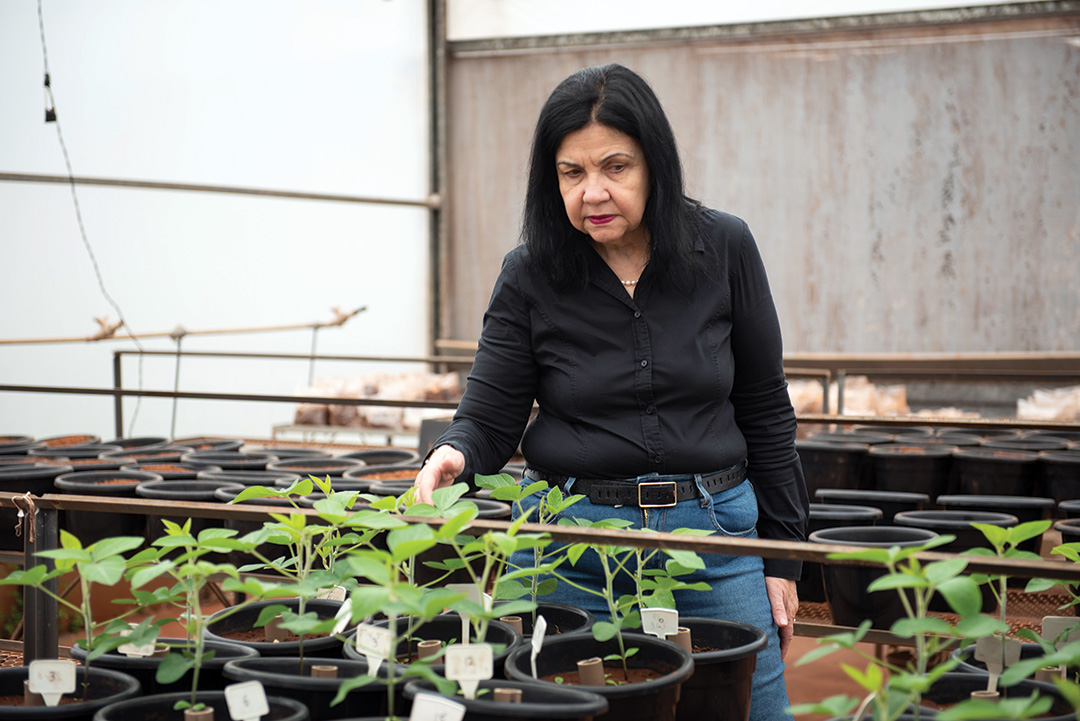
Mariangela Hungria, the 2025 winner of the prestigious World Food Prize, is a researcher and globally renowned microbiologist with the Brazilian Agricultural Research Corporation, or Embrapa. She developed this pioneering technology in 1982, and suspected it could transform agriculture around the world. In Brazil, the inoculant Bradyrhizobia is applied to legumes, namely soybeans. A second inoculant, Azospirillum brasilense, created in 2009, is reserved for staples such as corn, forages and wheat. These two complex bacteria hold the potential to save the farming collective billions of dollars annually.
When she was a student at Escola Superior de Agricultura in São Paulo back in the ’70s, farming was simple. “Everything was chemicals,” she said. However, Hungria arrived on the scene at just the right time as the Green Revolution took hold. “But I always knew there was a place for biologicals in the world.”
The humble scientist holds the same audacious goal she did decades earlier. “My main aim is to replace chemical fertilizers and, in some cases, like legumes, I can replace it 100 per cent,” she said.
A driving force in her work, she aims to make the pollution of waterways and greenhouse gas emissions from synthetic fertilizers a thing of the past. She believes the math confirms the superiority of her method.
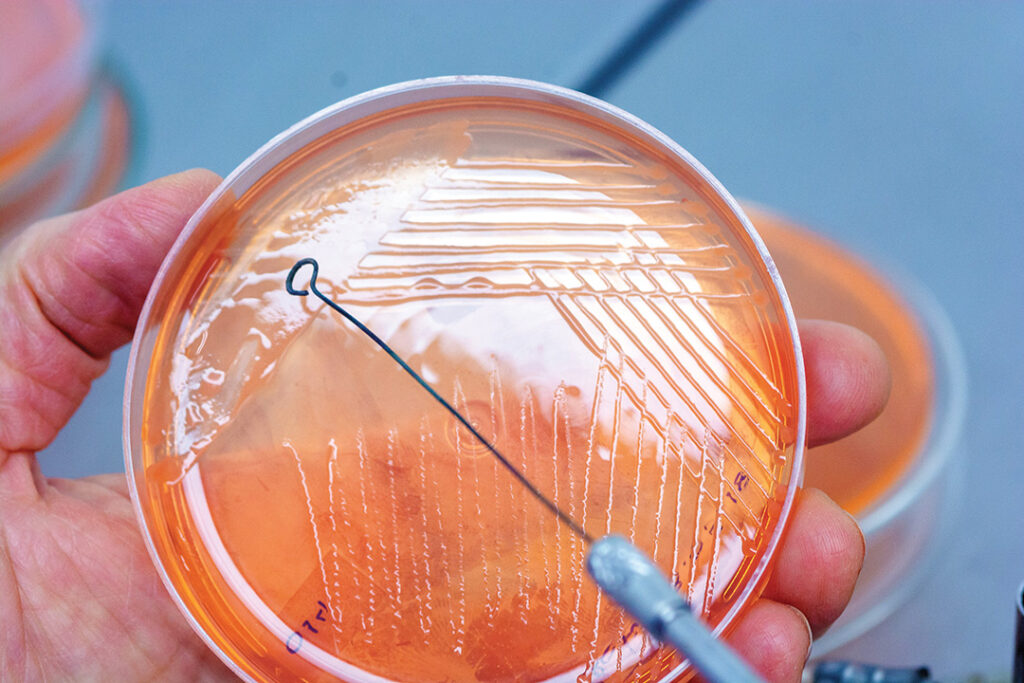
In the biological nitrogen fixation process, certain micro-organisms, mainly bacteria, possess the enzyme nitrogenase that can capture atmospheric nitrogen, or N2, from the air. It can break the molecules so the bacteria can use the nitrogen for their metabolism or transfer it to nearby plants. To produce synthetic nitrogen fertilizer from the atmosphere, it is necessary to apply high temperature and pressure. Therefore, to produce one tonne of ammonia requires about six barrels of oil.
“It’s very expensive and a polluting process,” said Hungria. “That’s why we work with biological nitrogen fixation as much as possible.” She has worked against a formidable opponent throughout her career: the chemical industry. “It’s very powerful,” she said. “It’s more powerful than many countries in Europe. They want to recommend nitrogen fertilizer because then they will be very rich. We from the research side, we are always fighting to prove to the farmers that it’s not necessary.”
Today, the Brazilian government’s official recommended rate of synthetic nitrogen fertilizer in Brazil is zero per cent. Prior to Covid, about six in 10 Brazilian farmers had adopted the biological inoculant Bradyrhizobia, slowly but surely, for their soybeans. However, it was due to global events that this adoption sped up.
Brazil commonly imported much of its fertilizer from the Black Sea region, which became virtually impossible when Russia invaded Ukraine in February 2022. This was compounded by Covid-related supply chain issues. Farmers had little choice but to switch to biologicals. “It was very sad times for humanity, but wonderful times for biologicals,” said Hungria. “We had this opportunity to really prove that what we’re talking about was correct.”
Today the rate of adoption is 85-plus per cent, according to Hungria. “You absolutely don’t need nitrogen fertilizer. You can still have high yields by adopting biologicals. Once you introduce the bacteria in the soil, it always contributes to the crop.” Embrapa research and state-level co-op trials have shown that every year fresh bacteria is applied to the soil, yield improves by an average of eight per cent.
The average yield for Brazil’s soybean farmers is 55 bu/ac, but certain farmers have hit 118 bu/ac. For comparison, the five-year average in Canada from 2021-25 was 46 bu/ac with a high point of 50.2 in 2024. The savings on fertilizer countrywide in Brazil for 2025 was $38.7 billion, or $140 billion Brazilian reals. This represented a 260 million-tonne CO2 reduction, the equivalent of taking 60 million cars off the road for one year.
On average, the product is available to Brazilian farmers for about $1.10/ac. “It’s the cheapest biological product in the whole world because we have a long tradition of advanced fermentation,” said Hungria. She added that chemical fertilizer is almost $55/ac, which makes the price difference an easy choice for farmers and a major issue for fertilizer manufacturers.
A second biological, Azospirillum brasilense, has been on the market in Brazil for 10 years and went from a zero to 57 per cent adoption rate. The product helps to grow longer plant roots, which helps with uptake of all biological nutrients and water.
For Brazilian farmers who do not know how to use biologicals, or still might be in the minority of holdouts, they can always educate themselves on Sunday mornings at 8:30 a.m. The 90-minute television show Globo Rural examines the latest in crop news and developments, including biologicals, and explains how to use these products and their advantages.
Hungria admitted that while biologicals are a wonderful product, great caution must be taken in handling them; after all, these are living products. “You really have to be careful about adding microbes to the soil,” she said. “If we do not put a very good micro-organism in the soil, we can’t displace it. We have to take care about contamination. If you are not careful, you can include pathogens. Working with biologicals is very different than working with chemicals. It’s life. It’s biology.”
Hungria believes Canada can reap the environmental and financial benefits, same as Brazil, with an embrace of biologicals. “I hold Canada in high esteem, the farmers work very hard,” she said. “They should really believe and try the biologicals. I think it’s a good opportunity. Society is understanding and asking for food with less chemical residues. It’s a huge opportunity for using something that is saving money for the farmers, having high yield and helping society.”
CAN IT WORK IN CANADA?
George diCenzo is one of two leads of the Bio-inoculants for the promotion of nutrient use efficiency and crop resiliency in Canadian agriculture project, or BENEFIT. He is also an associate professor of biology at Queen’s University and an adjunct professor of microbiology at the University of Manitoba.
The goal of this project closely mirrors the work done by Hungria in Brazil. diCenzo and a large team have worked on BENEFIT since 2023 and are working to develop bio-inoculants to improve crop growth in Canada. The crops in question are barley, bean, canola, pea and wheat. All the genomic resources related to the project will be made publicly available.
Inoculants are not new tech; in fact, they’ve been around for more than 100 years. However, diCenzo believes the efficacy of these products is now at a point where farmers could implement biological solutions in the absence of synthetic fertilizer for certain crops with no drop in results.
The goal of the project is two-fold. First, reduce greenhouse gases, and second, boost the environmental and economic bottom lines. “The goal, or benefit, is to reduce the amount of fertilizer used without impacting yield,” he said. “I’m not expecting we stop the need for nitrogen fertilizer, but if we can even reduce it a little bit, that helps both in terms of the environmental impact, but also the economics for growers. Nitrogen is expensive, and inoculants would be a lot cheaper.”
Soybeans have a long, documented success story with inoculants that form nodules on the roots of the plants. These fix free nitrogen from the atmosphere. However, the biggest knock against inoculants has also been the variability, even from farm to farm or a single farm between fields.
“What we’re trying to do is improve on them, to try and overcome some of those challenges that make them not top choices for adoption and make them more reliable and more likely to give results to growers that use them,” said diCenzo.
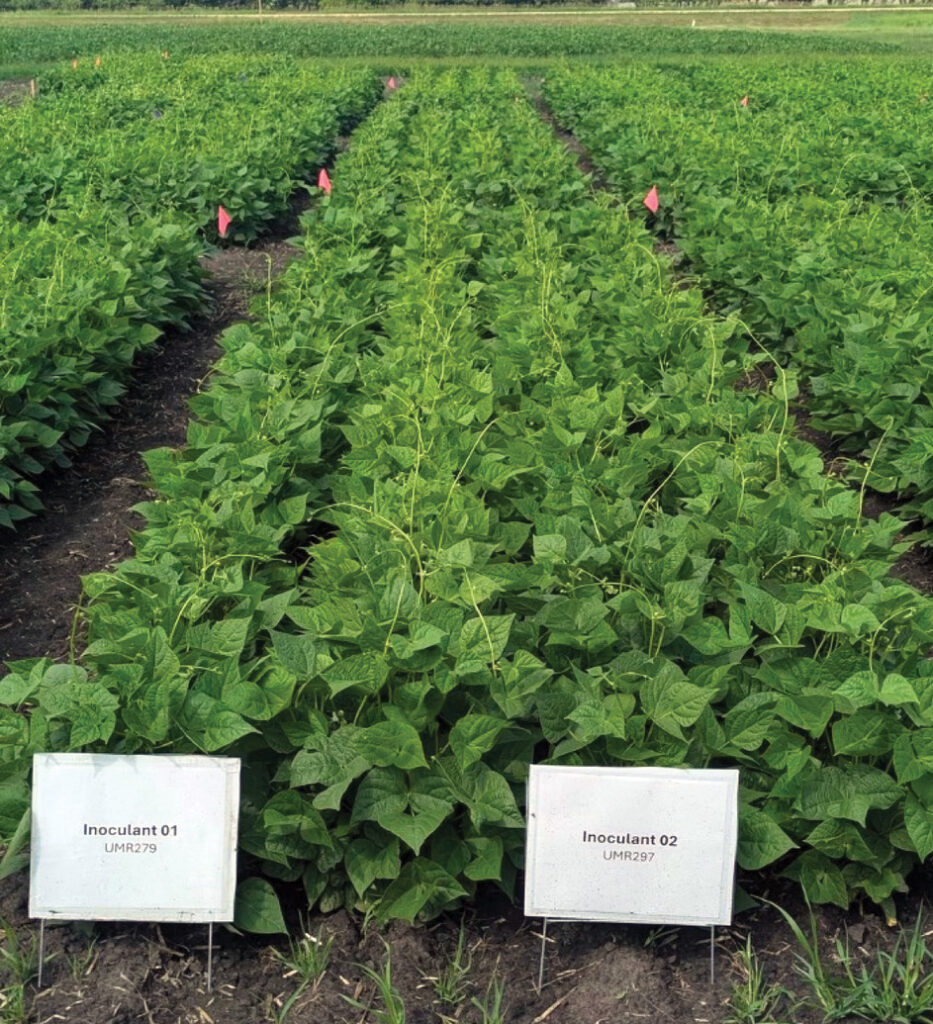
Much research has shown positive results in highly controlled lab environments. diCenzo said it’s time to ground truth these at real farms and prove inoculants work across a wider variety of crops and growing conditions.
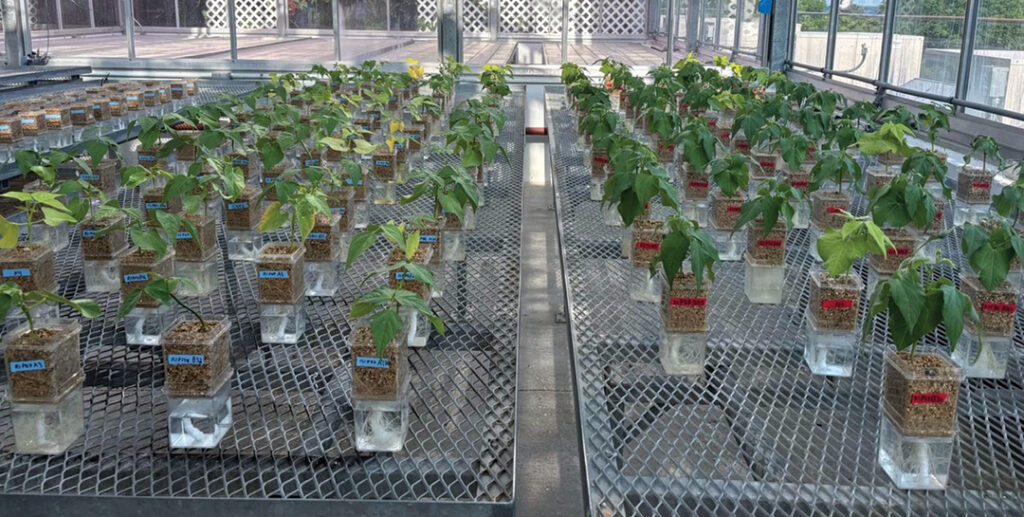
Part of the team’s focus is also to screen and assess bacteria that would grow well industrially so inoculants could be produced at scale for purchase by farmers. They’re also working to determine how well certain inoculants survive in various soil types.
The bacteria varieties being tested need to be cultivated within giant bioreactors, which usually contain various starter components, often yeast extract. Products eventually sold to farmers would most likely be in liquid or powder format.
With the study of dry bean, which includes kidney bean, navy bean and others, diCenzo hopes one day they can be successfully grown without the use of fertilizer and rely solely on bio-inoculants. He said it’s worked for soybeans, so, why not dry beans? “It’s still early enough on that I don’t want to say we are going to reach that point, but I think we have a lot of promising results that suggest we could get there.”
The other crops being studied, namely barley, canola and wheat, are incapable of interacting with rhizobia and will never be grown completely without synthetic fertilizer. While bio-inoculants containing other types of bacteria have the potential to support the health of these crops, they are not as effective as rhizobia are with legumes. “We had hoped we’d get to a 10 to 30 per cent reduction in fertilizer use on those crops depending how effective these other bio-inoculants are,” he said. “I definitely don’t see synthetic fertilizers going away, but I see these other bio-inoculants as a tool that could either help reduce the use of fertilizers to some extent or that gets used on top of synthetic fertilizers to increase yields, further reducing the emissions and cost per tonne of crop that’s produced.”
Another principal investigator is Ivan Oresnik. A researcher at the University of Manitoba who has spent most of his 40-plus year career working with rhizobium, he knows the work being done through BENEFIT has promise. He also admitted the use of biologicals is a problem the world over because there is no globally accepted standard use of practice.
“It’s harder to get biologicals into the field in Canada based on how the CFIA works, but in the States, it’s almost every person for themselves,” he explained. “There are a lot of products that come out, they don’t work, and then if people start using them and they don’t work, then it sort of gets to be an issue. Why would I buy something if it’s not working right?”
He believes the development of biological products is more important than ever, especially because fertilizer prices have remained sky-high since Russia invaded Ukraine. With continued maritime tension in the Strait of Hormuz, there appears to be no dip in prices for the foreseeable future.
“The whole idea behind BENEFIT was, ‘Can we increase nutrient use efficiency?’” he said. Oresnik believes it’s possible that within five years inoculants currently in development could be commercially available to farmers.
Oresnik had previously been involved with a soybean trial that involved zero nitrogen and the plants were “just fine.” He understands that it’s a tough sell to say “don’t fertilize it” to a farmer when their livelihood is on the line. Still, he is optimistic, and the BENEFIT project may truly live up to its name. “Even in the last couple of years a lot has been happening in this space with developments and where the state of research is. We moved very rapidly.”

Comments