



KEEP YOUR SOIL ALIVE
BY SEMETON AMOSU
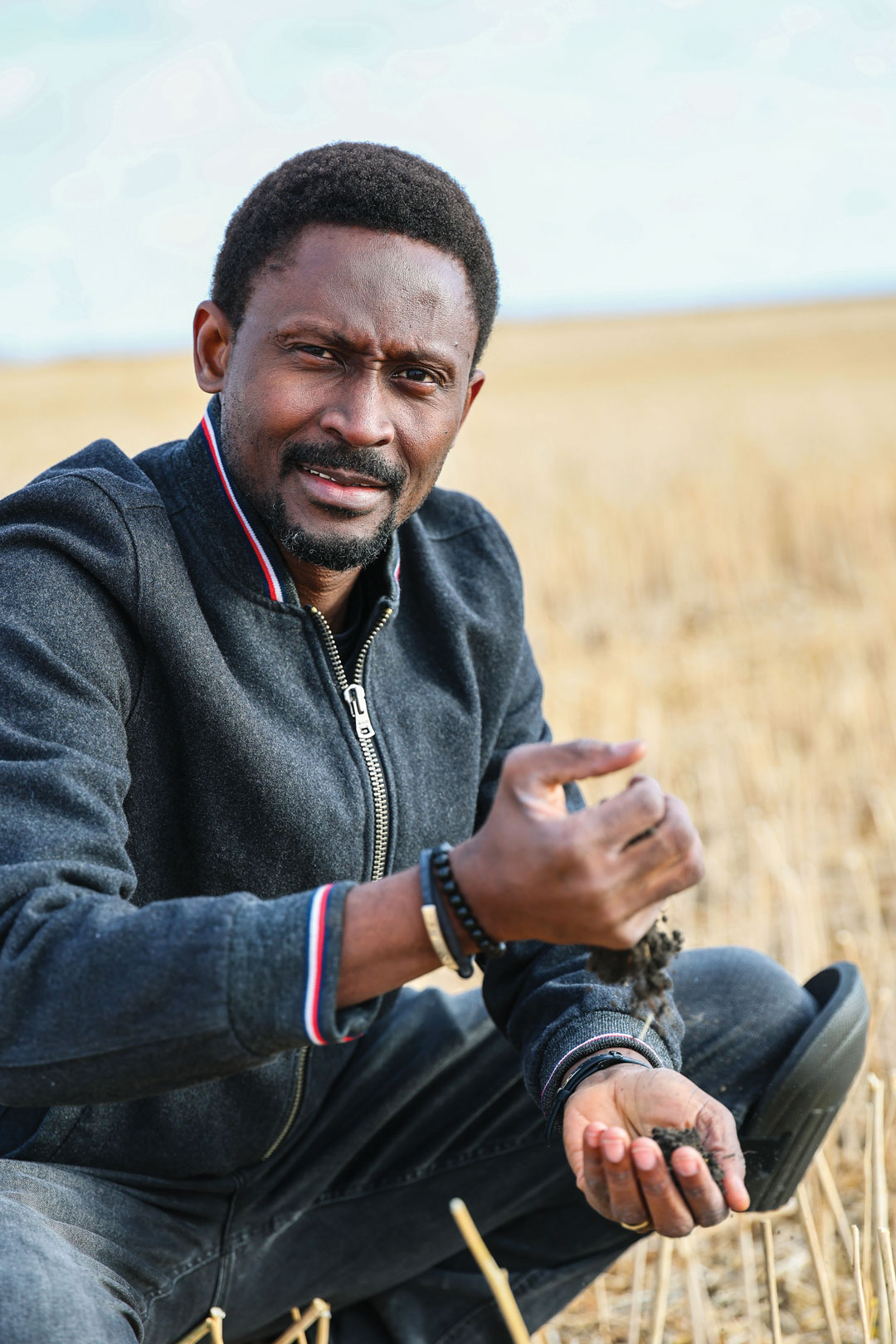
We often treat soil like it’s just dirt, but it’s so much more. It’s the source of life in many ways. Healthy soil is a living, breathing ecosystem that serves as our planet’s most vital capital. The health of soil, often termed “dynamic soil quality,” is a measure of its response to agricultural management and climate change. A single handful of healthy earth contains billions of microbes that work in permanent, silent partnership with plants to cycle nutrients, filter water and capture carbon. For farmers, this living network drives yield and resilience; for the public, it secures our food supply and stabilizes our climate.
Soil health has also been a national priority. This past spring, the Government of Canada introduced Bill S-230, the National Strategy for Soil Health Act. If passed, it will require a strategy be developed collaboratively by Agriculture and Agri-Food Canada in partnership with the Soil Conservation Council of Canada and additional stakeholders. Research into how we can secure and regenerate the soil is a sound environmental choice. It is also critical to the survival and sustainability of Canada’s agricultural industry.
The primary concern for farmers is typically the management of their soil. To do this properly, soil needs to be sampled and assessed through measurement and monitoring. At Olds College, researchers are fine-tuning the digital Olds College Assessment of Soil Health (OCASH) scorecard developed to measure soil quality and health, to ensure it is cost effective, interactive and user friendly for farmers.
The OCASH is an in-field digital diagnostic tool designed to help a wide spectrum of farmers, from small-scale to broadacre, quantify their soil’s vital signs and evaluate its living health and productivity.
The tool evaluates the soil’s capacity to perform its required functions in the ecosystem under various uses and prevailing weather conditions. It categorizes 20 distinct soil health indicators into five core areas: biological, chemical, environmental, physical and plant.
To use OCASH to measure and actively monitor soil health, users must follow a simple three-step process:
Conduct in-field assessments: Read the assessment guidelines. Use your senses and simple field tests to observe indicators such as soil odour, colour and texture. Extracting soil for a spade test is highly effective to examine undisturbed soil structures. Soil should have a crumblike structure rather than platy or blocky structure that indicates compaction. Check for earthworms, seedling emergence and plant disease symptoms.
Assign a rating: Rate each of the 20 indicators based on the OCASH assessment guide. Track soil health across a variety of areas—such as bare ground and undisturbed areas—to understand how human activities affect the ecosystem.
Calculate and track over time: You can only manage what you measure and monitor.
The soil health score is automatically generated from the measured indicators. Measurements and monitoring should be done at least once in a crop rotation, and at the same time of year, so scores can be compared and structural or biological improvements can be tracked.
Before and after evaluation with the OCASH tool, some simple soil management practices can be followed. Keep your soil covered for effective management, typically with grasses or crop stubble to protect it from environmental hazards and erosion. Many studies confirm stubble cover promotes soil health. It acts as a protective shield and natural mulch and serves to prevent topsoil loss from wind and water erosion. It also conserves vital soil moisture through reduced evaporation, and this organic matter fosters soil biological activity.
The OCASH scorecard will serve as an initial diagnostic tool as it allows farmers to quantify these indicators and rate their soil health. It will simplify the process of doing initial assessments and regular checkups on soil. As it takes vital signs and identifies symptoms, problems can be diagnosed for timely treatment.
The tool is being evaluated at the Olds College Smart Farm. For initial feedback, volunteer farmers will employ the tool at their operation.
The tool will complement other soil health assessment methods to support farmers as they optimize agricultural production in Alberta and across Canada.
Semeton Amosu is a research scientist at Olds College of Agriculture & Technology.

Comments