
Most read

Tag: CROP BREEDING

CROP RESEARCH HEADS WRONG WAY

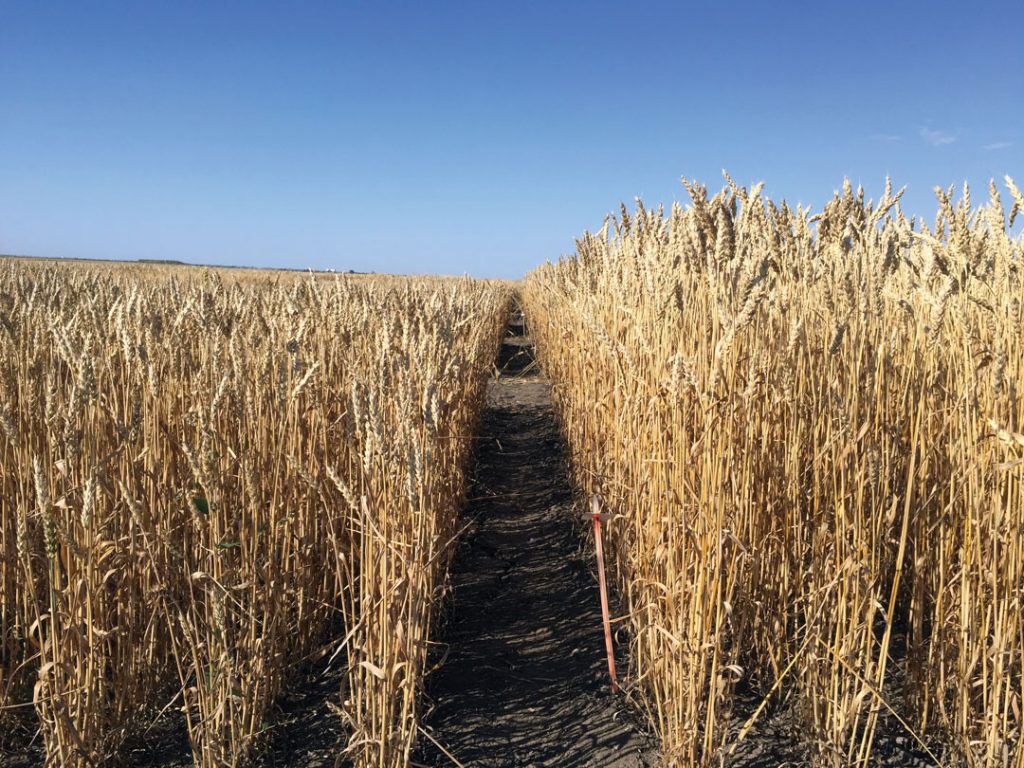
A year ago in these pages, Grain Growers of Canada (GGC) warned that the country was losing ground on crop research. Public investment was declining, competitors were investing more aggressively and farmers were being asked to do more with fewer tools. We called on the federal government to reinvest in the science grain farmers rely on, because productivity growth keeps Canadian grain competitive.
Keep Reading
SCIENCE SUPPORTS ECONOMICS

Launched in 2001 by three ambitious New Zealand scientists, AbacusBio is an agricultural science and tech consultancy whose sole purpose is to help ag businesses and farmer organizations maximize their research investments. The company creates custom strategies, systems and platforms built on genomic and genetic data to optimize crop and livestock breeding, business operations and value chain performance. It helps clients make sense of massive, complex data sets across multiple interconnected facets of agricultural business and production. “There is often a gap between the academic and the business sides of agriculture,” said John Crowley, managing director of AbacusBio Canada. “We can walk between the two.

Keep Reading
NEW SOFT WHITE WHEAT DELIVERS

Agriculture and Agri-Food Canada crop breeder Harpinder Randhawa has made impressive gains in soft white spring wheat breeding in recent years, and AAC Raymond is his latest success. “Soft whites are unique in their end-use potential,” said Randhawa, who works at the Lethbridge Research and Development Centre. “Historically, soft white wheats have been grown in southern Alberta and Saskatchewan for milling cookies, cakes and biscuits. Owing to their low protein and high starch content, however, they are also ideal for ethanol and brewing malt.”

Keep Reading
THE NEXT BIG THING

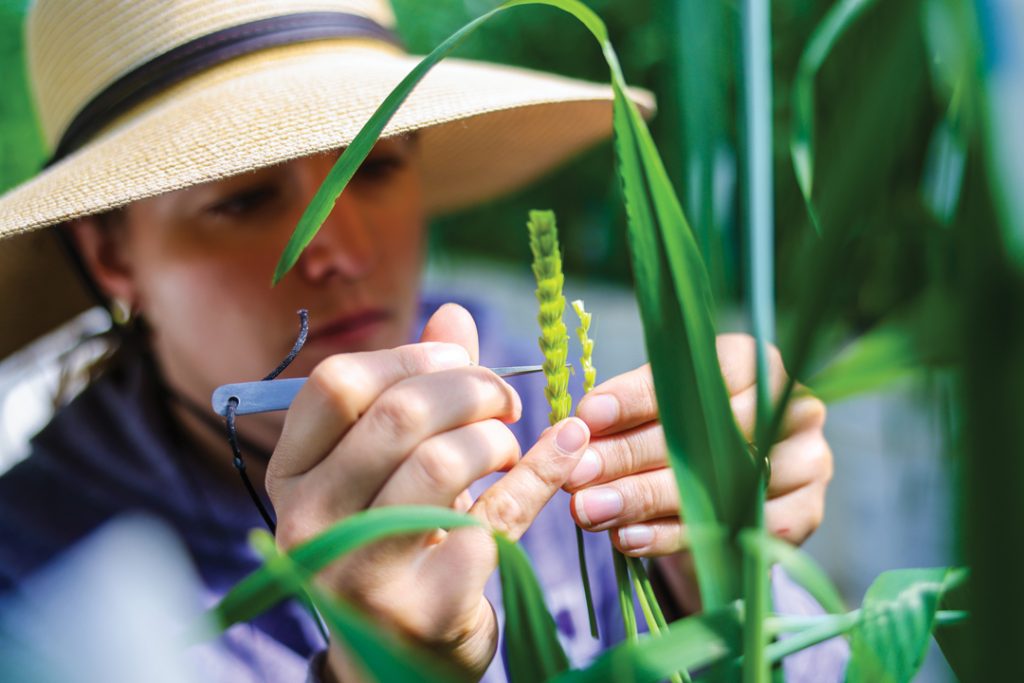
Interest in gene editing is on the rise, and this technology is now being used in cereal breeding for the first time. As wheat farmers continue to grapple with climate change, politics and consumer demand in their quest for black ink, gene editing—the process of adding to, removing or changing an organism’s DNA—may help balance these demands.

Keep Reading
INTO OVERDRIVE

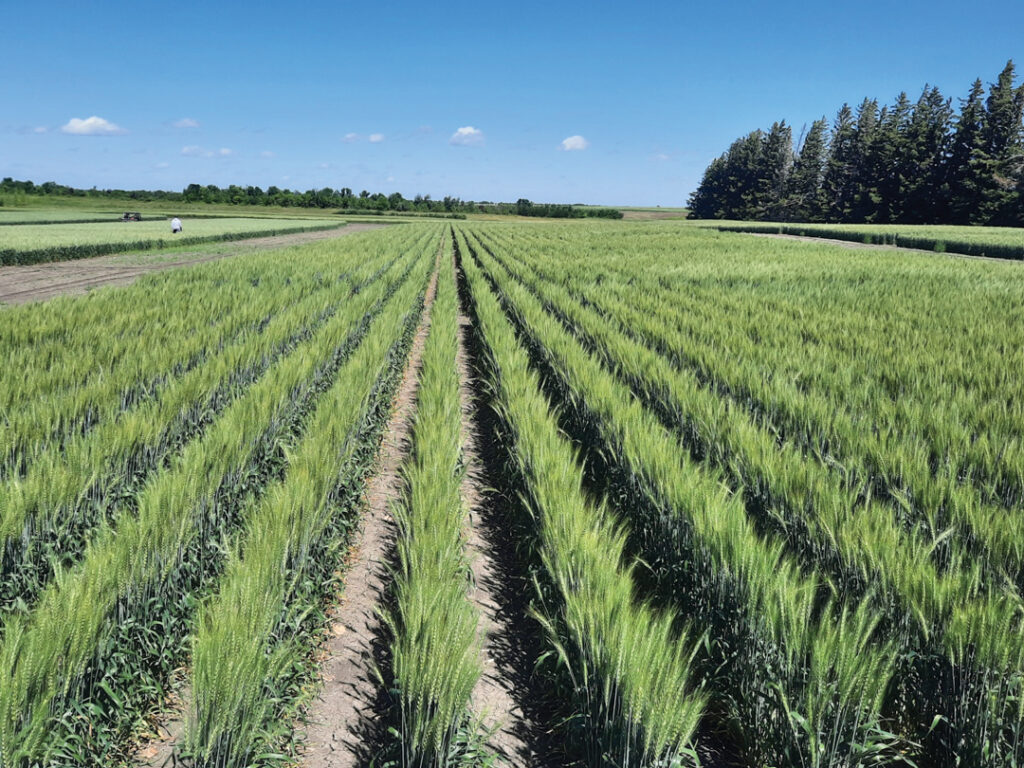
Despite the encouragement of crop groups and conservation outfits, winter wheat acreage in Western Canada has decreased sharply to 2.7 million tonnes in 2022 from the record high of 4.8 million in 2008. A sign this trend may reverse, acreage has increased slightly in Manitoba where farmers have struggled to seed spring wheat in wet fields.

Keep Reading
VARIETY SHOW

Whether it’s pernicious pests, an unpredictable climate or increasing costs, threats to cereal crops constantly evolve. To build and maintain a sustainable system for cereal production in Canada requires the ability to adapt. There are few better examples of adaptability in agriculture than the efforts made by plant breeders to assist farmers. 

Keep Reading
FCDC REIMAGINED

It is a time of transformation for the Field Crop Development Centre (FCDC) in Lacombe. Owned and operated by the provincial government since its establishment in 1973, the facility is now managed by Olds College, where staff have been tasked with a reimagination of the Centre’s feed and forage barley, malting barley and triticale breeding programs.

Keep Reading
GENETIC ADVANCES MULTIPLY

Two research projects funded by the Alberta Wheat Commission (AWC) have made significant advances in cereal crop genetics. Overseen by Pierre Hucl of the Crop Development Centre (CDC) at the University of Saskatchewan, the first of these examined the viability of a new dwarfing gene in bread wheat. Secondly, Nora Foroud of Agriculture and Agri-Food Canada (AAFC) developed new wheat and barley lines with improved resistance to Fusarium head blight (FHB).

Keep Reading
Go to TOP