



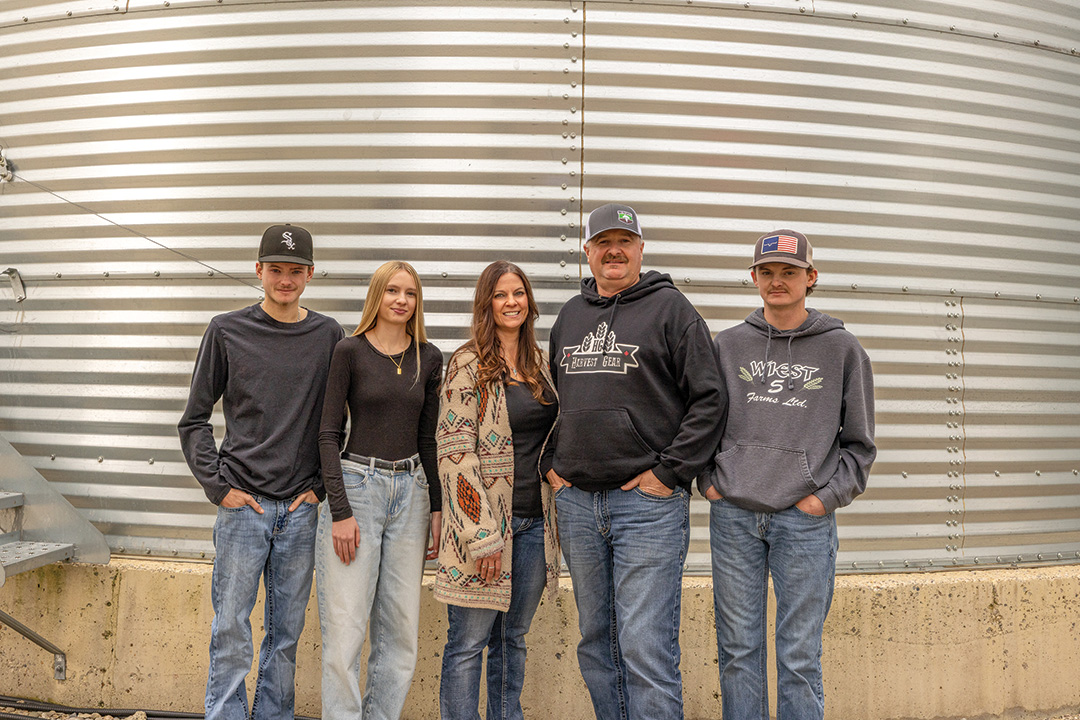
MEET YOUR FARM NEIGHBOURS
PHOTO BY HOLLY NICOLL
Dave Wiest’s grandparents established the family’s farm near Enchant in the early 1950s. Dave’s parents Ted and Cindy began farming full time in the mid-1980s. Dave took to the land straight out of high school in the late 1990s. He later married Karey, who grew up on a grain farm in the Foremost area, and the couple raised three children.
The rotation
Canola, malting barley and wheat.
Division of labour
While Dave manages crop operations, Karey tends to a range of household, field meal, binyard and transport duties with daughter Shelby who is in Grade 12. At school to earn his welding ticket, eldest son Tanner returns to the farm for seeding and harvest. Middle child Colton is especially interested in livestock and works with the family’s 225 head of cattle. Though he has been retired for 15 years, Ted continues to assist with harvest and additional duties.
Recent success
“It’s very tough country in our neck of the woods for dryland,” said Dave. “Our success has been getting more irrigation developed.” In 2026, the farm went from about 70 per cent irrigable to 100. This move included giving up rented dryland acres and adding sugar beets to the rotation. This latest new-to-them crop had filled out nicely as of late September. To realize return on investment in irrigation, the family works hard to maximize the potential of all the farm’s crops.
Cereals choices in 2026
Barley, durum and spring wheat acreage vary year to year. Dave’s main CWRS choice in 2026 was AAC Brandon but he also likes Clearfield. Providing another rotation, it allows him to spray out a previous barley crop. Barley acres were split between Brahma and KWS Kellie.
The 2026 harvest
Barley bushel weight under irrigation was down somewhat this year. Dave noted this appears to be the case in his area. However, cereal bushels per acre were satisfactory.
Cereal plans
The farm has always done well with spring wheat and Dave plans to increase acreage next year. “It combines nicely, stands well and always grades well,” he said. He may also try additional newer barley varieties with an eye to balancing bushel weight and yield.

Comments