


TEST THE TECH
BY GEOFF GEDDES • LEAD PHOTO COURTESY OF PICKETA SYSTEMS
Just as you test drive a car before you buy, a new program is focused on the testing and adoption of emerging ag technology. Launched in May 2026, the Agriculture Innovation, Validation and Adoption Network (AIVA) was founded by Farm Credit Canada (FCC), the Enterprise Machine Intelligence & Learning Initiative (EMILI) and the Wabash Heartland Innovation Network. The network is a standardized testing system that supports both innovators and farmers by validating new farm technology products.
“We formed AIVA to accelerate the adoption of proven technology for Canadian agriculture,” said Jacqueline Keena, CEO of EMILI. The program’s founders aimed to address two adoption barriers in the market. The first exists at the farm level. “Farmers are so busy operating their businesses and making complex decisions,” said Keena. “How can we help them with tech adoption choices that will benefit their farms through reduced costs or greater productivity?”
Entrepreneurs and innovators also face a barrier in that full-scale testing and evaluation spaces are hard to come by. In the past, companies would often go door-to-door asking farmers to adopt unproven technology, which was usually a tough sell. “Even if farmers were agreeable, innovators would only have results from one farm with one set of variables,” said Keena.
AIVA will employ four demonstration farms where early-stage technology is tested and validated. It oversaw nine projects across four farms in 2026. “The staff at these farms ensure a high level of oversight and management of the technology,” said Keena. “[AIVA] then provides the companies with feedback on how their product performed in real world conditions.”
If AIVA finds that a technology provides measurable value to farmers and is therefore ready to market, innovators may choose to continue testing it in AIVA’s adoption stage. AIVA’s participating farmers trial the technology on their commercial farms through a complete growing season using AIVA’s standardized testing framework. “These farmers complete a report card on the technology’s fit with Canadian agriculture,” said Keena. “Innovators review that report and use it to refine their product before taking it to market.”
For farmer participants, it’s a chance to see how the technology performs at full scale prior to making an investment.
“We currently have 30 farmers signed up in Manitoba and Saskatchewan, representing 300,000 acres,” said Keena. “Over time, we hope to include farms in other provinces as well.”
Once a product passes the validation or adoption stage, AIVA will share the information it has compiled with the public through online reports and demonstration days. Findings for 2026 will also be reviewed at EMILI’s annual Agriculture Enlightened conference on Nov. 5 in Winnipeg, MB.
The AIVA Network is funded primarily by FCC, which has pledged to invest $2 billion in ag tech by 2030. FCC also intends to attract $5 billion from additional Canadian investors.
“It’s exciting to gather aligned technologies across the country and help pinpoint those that will have the most impact for Canadian producers,” said Keena. “We’re also thrilled to support innovators in their quest to develop ag tech that is effective and practical for its users.”
PLANTS THROUGH A NEW LENS
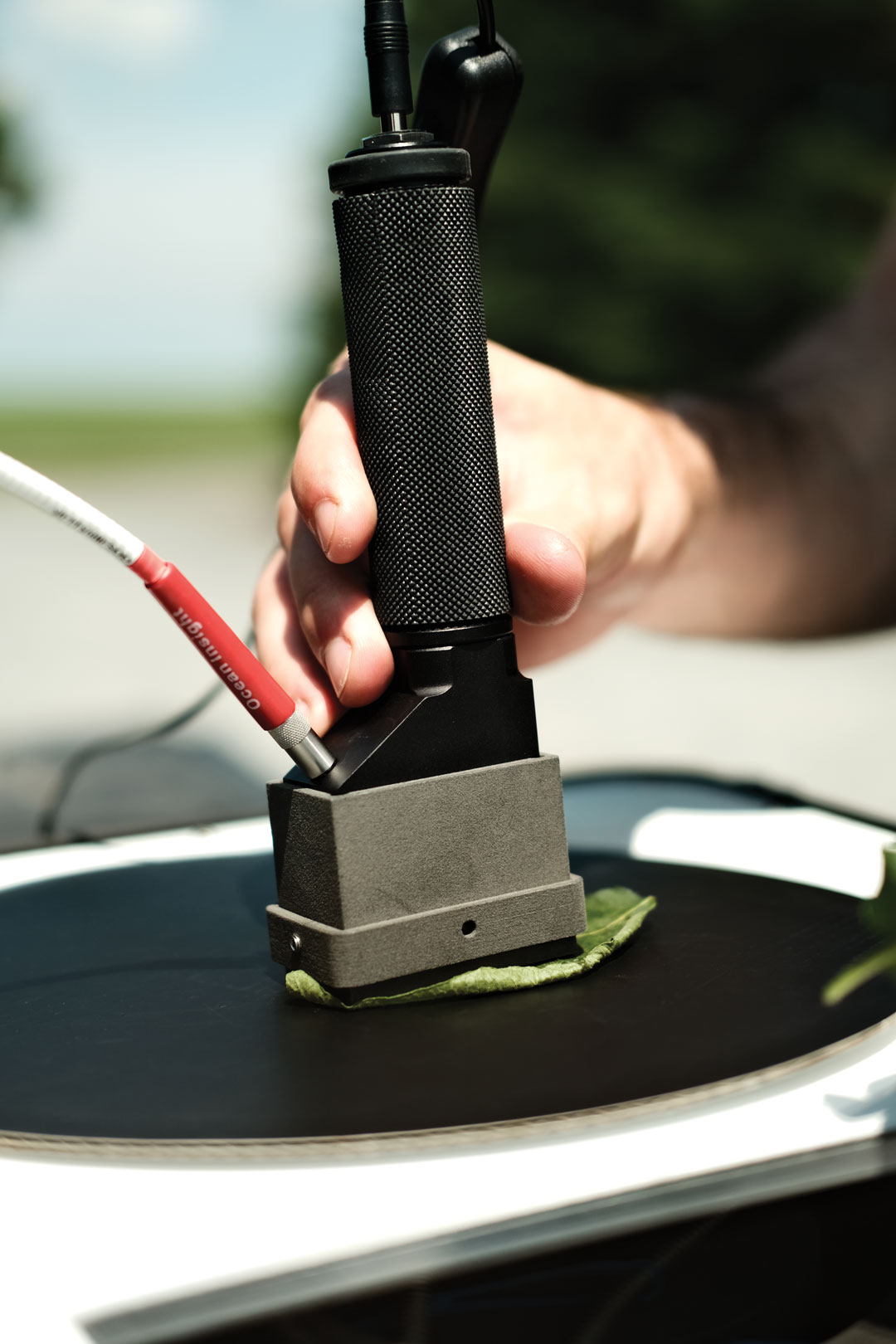
One of the nine technologies being tested at AIVA’s demonstration farms is the Leaf-Evaluated-Nutrient-System (LENS) by Picketa Systems. This portable plant tissue nutrient analysis technology is designed to provide farmers and agronomists with faster access to usable nutrient insights.
The tool was developed by four New Brunswick potato farmers. Potato plant tissue analysis is necessary for decision-making around nutrient application. However, they found the time and money needed to conduct lab analysis often made it impractical. In search of a better option, the four Picketa founders developed their own.
“The LENS uses scanned leaf samples to analyze plant nutrient levels and deliver instant results,” said Alexa Campbell, Picketa marketing and operations lead. Leaves are collected, often in field areas where plants are stressed. Using the LENS, which resembles a large briefcase, the farmer scans the sample. Its hand-held optical sensor measures reflected light to calculate levels of 13 macro and micronutrients within the leaf. Results are displayed on the unit’s digital screen within minutes.
“Using the LENS, agronomists receive nutrient results in about a minute instead of waiting several days for traditional lab results,” said Campbell. “As a result, farmers and agronomists can make timely and informed decisions on how to manage their crops.”
With AIVA, Picketa is validating LENS performance across additional crops that include barley, canola, corn, oats, soybean and wheat. To do this, LENS measurements are compared to laboratory tissue tests. “Our goal is to further validate the technology through the AIVA Network,” said Maxime Dumont, Picketa co-founder and COO. “We want to continue improving tools that help farmers make more timely and efficient nutrient management decisions.”
According to Dumont, Picketa works with AIVA because third-party validation and collaboration across the agricultural innovation ecosystem are needed to advance new technologies. “A standardized approach to testing helps ensure solutions like the LENS are rigorously evaluated and can deliver meaningful value to farmers and agronomists,” he said.
TAP INTO TITAN
FarmerTitan is likewise the product of on-farm problem solving. Founder Katie Friesen saw her dad and brother struggle to keep track of repair, maintenance and related expenses for their farm equipment and developed a tool to manage these tasks.
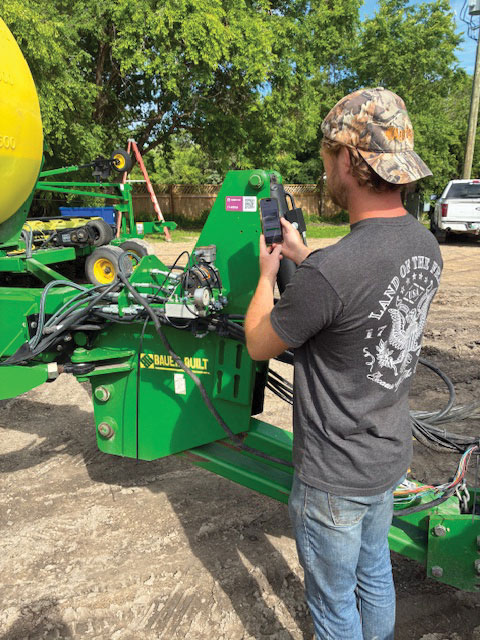
“Farmers simply place a QR code that we have programmed onto every piece of equipment,” said Friesen. “Using our app, they can track repair types, dates and costs, updating the information each time a repair is made. When the next person comes along to use that equipment, they simply scan the QR code with their phone and see a complete history of what has been done.” This history can include service schedules, work orders and parts information. Managers may also input the date a repair is needed, indicate if it’s urgent and assign that task to a certain employee. It’s easier than tracking everything with spreadsheets or pen and paper.
“Equipment repairs are often expensive and lead to costly downtime,” said Friesen. “By keeping close track of maintenance, you can limit those repairs and keep machines running smoothly. Ultimately, we want to help farmers save time and money. Around 25 per cent of repairs on farm are preventable, and farmers run on slim margins. It’s often the little things that get you when they turn into big problems, and FarmerTitan helps catch those little things in a timely manner.”
FarmerTitan requires a set-up cost and a yearly fee based on the volume of equipment being tracked. They have competitors, but Friesen believes its ease of use, even for those who are not tech savvy, gives FarmerTitan the edge.
By working with the AIVA Network, the company hopes to deliver on the full potential of its technology. “AIVA is a great thing for Canada,” said Friesen. “It’s awesome to have real world feedback, and AIVA does a good job of bringing technology to farms.”
While the company can easily test the software component of the product from its office, the use of the app and QR codes by the farmer is another story. “It’s important to have boots on the ground to validate the effectiveness of FarmerTitan in the trenches,” said Friesen. “We can say that it’s effective and easy to use, but we need to see it working for farmers before we take it to market.”

Comments