



GUESSWORK ELIMINATED
BY EMILY R. JOHNSON • PHOTO COURTESY OF YONATHAN URIEL
Better known as wireworm, click beetle larvae are trouble. Because it has been difficult to determine which wireworm species are found in a field, this has made response tricky. With new research by Agriculture and Agri-Food Canada (AAFC), time and guesswork may be eliminated.
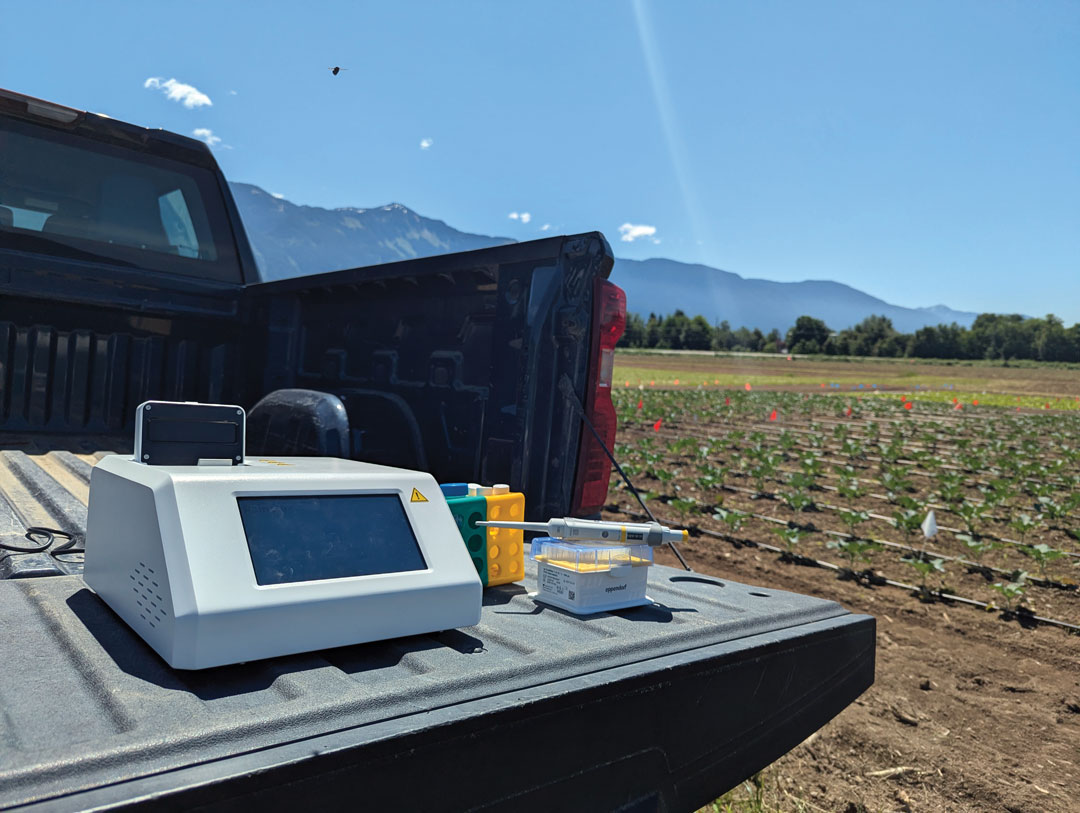
AAFC research scientists Wim van Herk and Michelle Franklin at the Agassiz Research and Development Centre spent four years developing molecular primers for 15 known pest click beetle species found across Canada. With specialized equipment known as a PCR machine these short DNA fragments can be used to quickly identify wireworm species. The work is funded by AAFC and Genome BC, a not-for-profit that supports genomics research and innovation.
Of Canada’s hundreds of click beetle species, roughly 20 are considered significant agricultural pests. During their larval stage, they live underground and actively damage crops. These wireworms are nearly impossible to visually identify. A harmful species and a harmless one can appear almost identical. Farmers must send samples to a lab and wait days for results or make a snap judgment about pesticide application.
The new primers change this. Species can be identified within just a few hours. This is as groundbreaking as it seems. “For Canadian agriculture, for the study of wireworms, absolutely,” said van Herk. Molecular identification of insects isn’t new, but its application at this scale is, especially across a country as geographically vast and ecologically varied as Canada. “Other studies have done it for smaller geographic regions, but considering the size of our country, it is a large investment and a lot of work.”
A challenge faced by the researchers was accounting for natural genetic variability within a single species across regions, known as intraspecific variation. After four years, the team is confident that false positives have been eliminated. “We’ve made sure that the tool is general enough that it can identify a species wherever it is found, but specific enough that it’s only going to pick up your pest species and not a harmless species found in the same field,” said van Herk.
This precision benefits the farm bottom line as well as the environment. “Really, when we think about our population continuing to grow, and that our demand for good food in Canada continues to increase, we don’t want to be using more insecticides than we have to,” said Franklin. “We want farmers to have tools to manage the pests and get the most out of food production in an environmentally sustainable way.”
This past summer, the team conducted trials at field day events at the Agassiz Research and Development Centre in Agassiz, B.C., and at the UBC Farm in Vancouver, B.C. The 15 molecular primers used to identify wireworm species are available upon order to pest labs and field technicians with access to a PCR machine. van Herk noted an update will be made to the AAFC Guide to Pest Wireworms in Canadian Prairie Field Crop Production. This will include new resources to support the use of molecular identification tools and a risk assessment index. The current guide can be found online at publications.gc.ca.
An insect that lives underground and evades easy identification, wireworm may finally be running out of places to hide.

Comments