



IT’S A WHITE BREAD WORLD
BY ELIZABETH CHORNEY-BOOTH
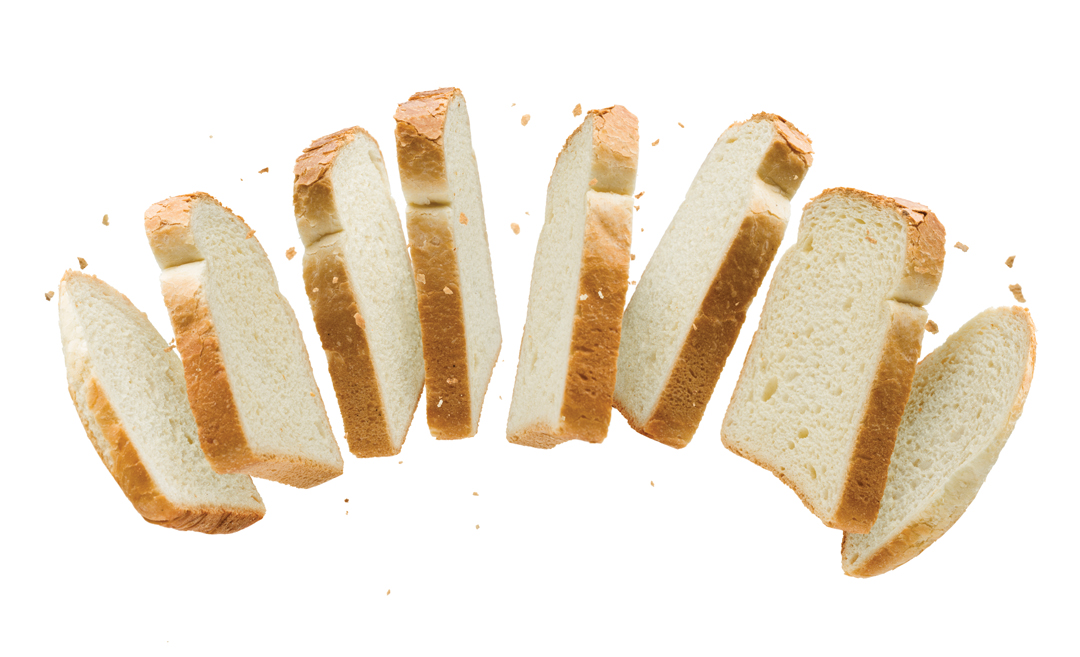
The words “white bread” don’t tend to stir excitement in the hearts of Canadian consumers. The term itself is used as shorthand for “boring,” and typical grocery store white bread is often considered a junk food, inferior to whole wheat counterparts. But despite white bread’s second-rate reputation, squishy snow white bread has long been a staple of diets around the globe. While trends may ebb and flow, refined grain breads continue to have a place in our ever-changing culinary world.
Internationally, evidence suggests white bread is having a moment. U.K. Flour Millers reports that nearly 100 per cent of British households buy bread of some sort and 60 to 70 per cent of it is white. A whopping 76 per cent of Brits say they regularly eat white bread. In 2024, New York Times Magazine declared white bread is back, at least as a restaurant trend, and evidence of this can also be seen in Canada. Fashionable restaurants in this country are trading tweedy multi-grain bread baskets and sourdough for shokupan (Japanese milk bread), brioche and Parker House rolls, all breads made with white flour.
OLD FASHIONED REMAINS OUT OF FASHION
Of course, restaurant menus and food trend stories in consumer magazines only tell part of the story. While certain types of white bread may be hip, it’s not necessarily dominating in Canadian homes. Martin Barnett, executive director and general manager of the Baking Association of Canada points to Agriculture and Agri-Food Canada data that indicates white pantry bread sales in Canada are forecasted to gradually decline between now and 2028. Canadians are turning to whole grain or artisan breads that carry perceived health benefits. White bread production became popular as an inexpensive method to feed families in the mid-20th Century, said Barnett, but large-scale bakers are meeting public demand for healthier and more flavourful alternatives. “We didn’t do a very good job in the ’60s and ’70s of making sure white bread products were as healthy and nutritious as they could be, but we did a really good job of feeding hungry people after the war. That’s worth celebrating,” said Barnett. “But it meant moving away from traditional ways of baking with longer fermentation and breads made by hand,” he added. “Large commercial bakeries are now responding by making products with healthier ingredients and using clean label inclusions to enhance production and increase the shelf life of pantry bread.”

If you’re making French baguette, the French baguette calls for white flour. If you’re making as Italian focaccia, it calls for white flour. You want to stick to the original recipe.—Adriana Fazzina
ELEVATION AND MULTICULTURAL BREADS LEAD THE PACK
While many Canadians may turn their noses up at classic white pantry breads, it doesn’t mean white bread faces extinction. Both smaller bakeries and large grocery store chains continue to display white pan loaves alongside their sourdough and multi-grain selections. White flour items such as hotdog and hamburger buns are typically not popular in whole grain form. While white bread on its own may not be terribly exciting, its sturdiness and mild flavour earn it a place as the favoured vehicle for peanut butter, sandwich meats and other high-flavour ingredients intended to be the star of the show.
“A customer told me their best-selling breads are things people can spread peanut butter on. They call it the peanut butter test,” said Jonathan Aleong, director of bakery research and development at Puratos Canada, an international baking industry supplier based in Belgium. “If you want a neutral carrier for hamburgers or hotdogs, you want that neutral flavour and texture.”
Though customers may prefer tried-and-true white bread hotdog buns and sandwich bread, innovations are being made within the larger white bread category. Aleong’s colleague at Puratos, vice-president of marketing Adriana Fazzina, said while she doesn’t see much movement in the realm of standard grocery store pantry breads, white bread products in the artisan or globally influenced categories are on the rise.
Multicultural bread products such as Italian ciabatta, shokupan and Nigeran Agege, as well as butter-heavy brioche and crusty French baguettes, all generate consumer interest.
“Those are traditional products—bakers use what the traditional product is calling for,” said Fazzina. “If you’re making a French baguette, the French baguette calls for white flour. If you’re making an Italian focaccia, it calls for white flour. You want to stick to the original recipe.”
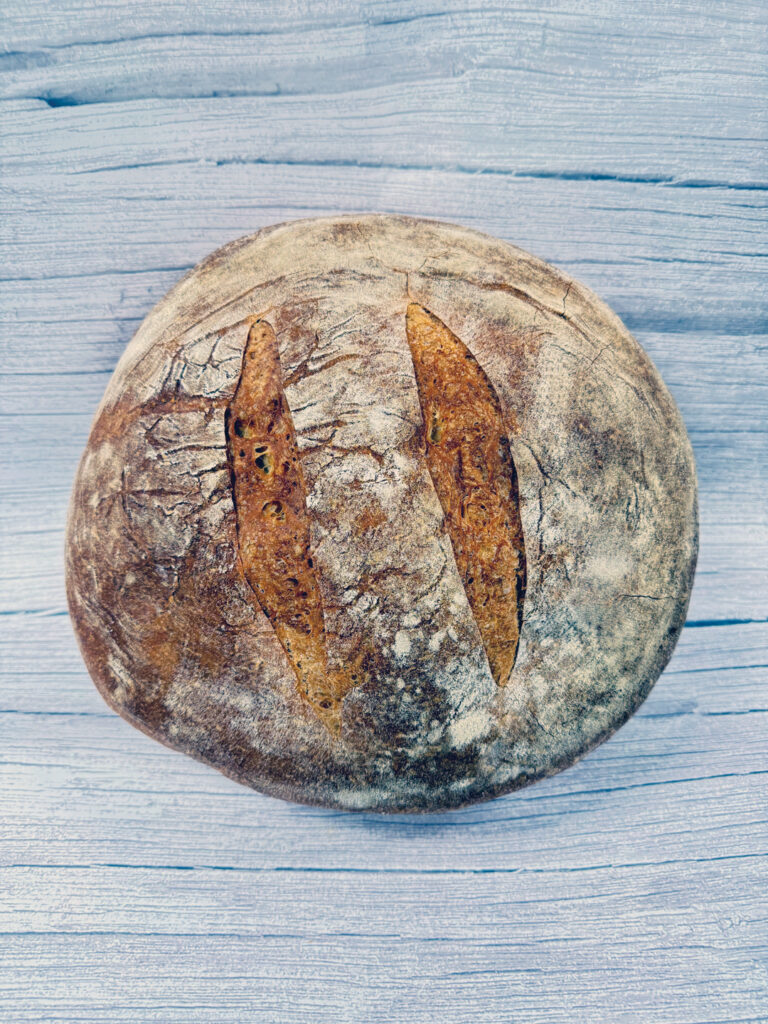
Fazzina said she also sees innovation in terms of adding new ingredients and techniques to add a twist to basic white breads. While many bakers may put sourdough in a category separate from white pan bread, many sourdoughs use white flour and fall within the white bread family. “We have a lot of conversations about more elevated products,” she said. “We do see innovation taking bread one step higher in terms of the use of other ingredients like grains, seeds or creating a brioche type of product.”
FORTIFICATION POWER
White bread, be it the squishy pan bread or the fancy artisan variety, is perceived to lack nutritional value. Visually speaking, white bread may not appear as nutrient rich as its whole grain counterparts. It does generally fall short when it comes to dietary fibre because the wheat’s germ and bran are removed in the milling process. Still, Canadian white flour contains far more nutrients than some may think.
Canada’s food and drug regulations require white flour to undergo a fortification or enrichment process that adds certain nutrients. This includes the B-vitamins thiamine, riboflavin and niacin as well as folic acid, iron and the voluntary addition of vitamin B6, d-pantothenic acid, calcium and magnesium. The process reintroduces the nutrients lost in milling and addresses public health concerns such as iron deficiency and fetal neural tube defects that can occur during pregnancy. The process is like the iodization of salt or addition of vitamin D to milk.
Enriched bread—which all white bread in Canada is required to be—is often higher in iron, B vitamins and folic acid than whole grain or whole wheat bread, which do not typically undergo fortification processes.
“White bread can certainly be part of a healthy diet that is based on variety and moderation. We know that the fortification process takes care of some of the micronutrient differences between white and whole grain bread,” said Alison Duncan a professor in the Department of Human Health Sciences at the University of Guelph. She noted that because white bread is typically eaten in tandem with other foods, consumers shouldn’t fret too much about the nutritional content. “White bread can also facilitate a nutrient-dense diet by the choice of foods placed between the white bread slices.”
CWRS MAKES GREAT WHITE BREAD
Whether bakeries around the world stick to old school white pan bread or choose to innovate, white bread production is good news for Canadian wheat farmers and flour millers. CWRS wheat accounts for 60 per cent of Canada’s wheat production and remains the gold standard for bread baking. Its versatility also makes it useful in additional wheat-based products beyond white and whole grain bread.
CWRS is coveted because of its high quality. Its strong protein structure and high content—12.5 to 14.5 per cent—produce bread with a soft and springy texture, good volume and a consistent crumb. Domestically, high quality bread is enjoyed in Canada because it makes sense for millers to exclusively use Canadian wheat (though not necessarily CWRS). But with more than 80 markets around the world importing CWRS, Canadian grain also adds pep to flour blends globally.
“It’s often considered a top-up. In Canada, millers are blending with other Canadian wheat classes to make that all-purpose flour, while international countries might blend with wheat from the Black Sea region, which might be a hard red winter wheat with lower protein content,” said Elaine Sopiwnyk, vice-president of technical services at Cereals Canada. “We refer to CWRS as an improver wheat because when you have it as part of a wheat blend, you’re really improving that overall quality of the flour.”
Because Canadian farmers produce so much CWRS for white and whole grain breads and other baked goods, fluctuations in white bread trends won’t necessarily create fluctuation in demand domestically or in international markets. Breads such as shokupan, brioche and ciabatta can all benefit from the use of CWRS flour. As consumers the world over continue to eat their daily bread, in whatever form, Canadian wheat farmers will profit.
As for white bread’s perceived boringness, sometimes a straightforward classic is exactly what the market, and people’s tables, need. When it comes to pricing, availability and the ability to please a crowd, there’s no beating a really good piece of white bread, preferably made with Canadian flour and particularly when paired with a pat of butter and a smear of jam.
“White bread will always be in the market as a base. It’s an entry base as far as price is concerned, but also as far as general population preference is concerned,” said Fazzina. “Those needs will not disappear anytime soon.”
INTERNATIONAL TASTES
Edmonton’s simply named Italian Bakery opened in 1960 with the intention of selling pagnotta, a large, white Italian loaf prized for its hard and crusty exterior and light and airy insides. The bakery has expanded significantly over the years. It now produces more typically North American sandwich breads, hamburger and hotdog buns for grocery stores and other wholesale customers such as Rogers Place. Storefront sales of traditional Italian breads tie the business to its roots.
The Italian Bakery exclusively sources Canadian flour made from wheat grown in Saskatchewan and milled in Alberta. The business’s bakers favour white flour for its classic Italian products. This satisfies tradition as well as the need for a high-starch base with good protein to create the desired texture. “Our older customers, they all want the hardest pagnotta they can have,” said the bakery’s Chantal Chinni. “‘Give me the burnt one,’ they’ll say. They love that hard crust so they can dip it in their soups and stews.”
Asian-headquartered bakery chains such as Tous Les Jours and Paris Baguette have set up shop in Western Canada in recent years. One of the most prolific Asian style bakeshops in Alberta is Calgary-based Wow Bakery, with locations throughout the city and central Alberta. Having noticed a growing interest among Calgarians in Korean culture and curiosity about unique flavours, entrepreneur Andrew Kim developed the concept around Asian baked goods, which include deliciously spongy and mildly sweet milk-and-butter loaves.
Wow bakers constantly tweak their flour blends, using Canadian flour as often as possible and employs various strengths to complement Asian bread-making methods, which often include making a cooked flour roux. The result is a sandwich-ready white bread flavourful enough to eat on its own. “I can literally sit down, open a bag and eat the whole loaf without any supplementary jams,” said Kim. “It’s because of the way we make it. It’s a shift to realizing white bread can actually taste great on its own.”

Comments