



INDUSTRY CALLS FOR TRANSPARENCY
BY RYYNN RATHWELL
Imagine having a clear, weekly snapshot of which ports are signing contracts, volume of grain movement and shifts in global demand. Saskatchewan ag groups say this kind of visibility could sharpen the marketing strategies of Canadian farmers, improve risk management and produce stronger outcomes. In today’s fast-paced marketplace, farmers have limited information on their grain’s ultimate destination once it enters the supply chain until weeks or months later. They may be unaware of potential changes in supply and demand until it’s too late to take advantage.
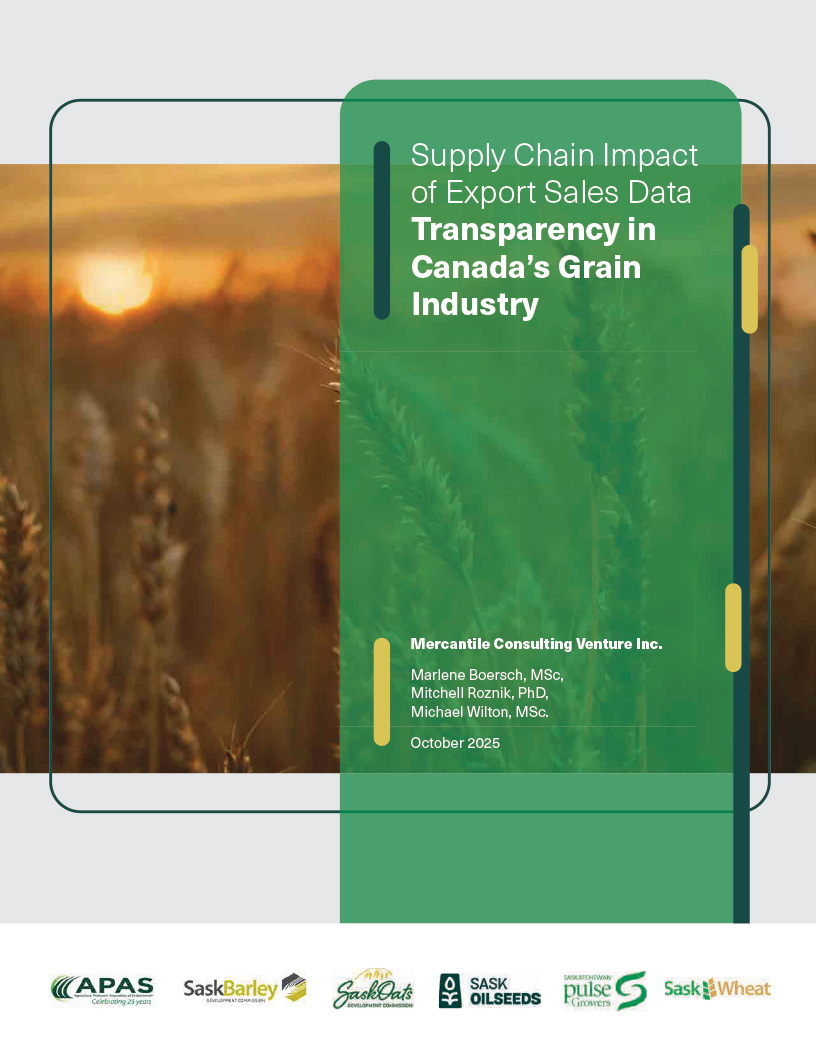
A new study commissioned by several Saskatchewan farm groups has renewed calls for Ottawa to develop a national export sales reporting program. Released in October 2025, Supply Chain Impact of Sales Chain Data investigates how broader access to export sales data could influence farm decision-making from cropping choices to marketing strategies. SaskWheat, a report partner, noted in a recent press release that Canadian farmers face a significant information disadvantage against international competitors whose governments mandate robust transparency requirements.
For example, U.S. exporters must report any transaction with a non-U.S. buyer for products that include barley, corn, oats and wheat. Depending on volume, these transactions are reported on a daily or weekly basis. This gives American farmers timely insight into global demand.
Jake Leguee, farmer and SaskWheat chair, believes the report’s findings are clear. “As a farmer, it showed me how much money we leave on the table simply by not having access to enough information,” he said. “Farmers have been asking for this information for years, to put them on a level playing field with exporters and processors. Information only matters if it’s current. An export sales report like those done in the U.S. or the EU would be far more timely and thus much more useful.”
Weekly Canadian Grain Commission reports offer volume data but no destination, whereas StatCan reports include only monthly destination information, so they lag significantly behind the market. Farmers argue a reporting program could combine the best qualities of these reports and offer timely grain marketing assistance.
Jon Driedger of LeftField Commodity Research said exporters have simply evolved within a system that gives them more timely access to information than it does farmers. From a market efficiency perspective, he emphasized timely information is essential and supports better informed decision-making across the value chain. A new reporting program, he added, must balance transparency with the need to protect privacy and commercial confidentiality.
The report states bridging the information gap could increase annual revenue for farmers by up to $56.6 million and hugely shape and enhance market efficiency. However, development of a model that works for everyone remains a challenge. Leguee hopes the study and call to action will act as a catalyst, and farm groups are open to engagement with exporters and processors. “It works in other countries; it can work here, too. We will also discuss this with the federal government to see what tools are available to get this done.”
As tariffs complicate global markets, farmers require timely data to remain competitive, responsive and diversified more than ever. “The study contributes to Agriculture and Agri-Food Canada’s understanding of the potential impacts of improved data transparency on how grain markets function,” reads an emailed response from the federal ministry.
While the Canada Grain Act is under review, farmer support for policy change appears to be growing. Another report partner, the Agricultural Producers Association of Saskatchewan, noted in an emailed statement, “Data transparency isn’t just a policy issue, it’s about fairness and competitiveness for every Canadian grain farmer.”
To read the report, visit saskwheat.ca.


Comments