



INDUSTRY ADDRESSES CONSUMPTION DIP
BY DON TSE • PHOTOS BY BRYCE MEYER PHOTOGRAPHY
For years the North American beer industry has contended with a gradual downturn. Since 2019, beer sales have dropped 11 per cent. According to Beer Canada, 2025 domestic beer sales were down 2.4 per cent compared to 2024. For imported beer, the decline was noticeably steeper, as Canadians drank 8.6 per cent less such beers in 2025 versus a year prior.
The decline is due to many factors, said Luke Chapman, vice-president of federal affairs for Beer Canada, the industry’s trade association, which is composed of brewers that together produce more than 90 per cent of the domestic beer sold in the country. Among them, consumer disposable income has declined in recent years. This means consumers go out less frequently, and when they do, they often limit themselves to one beverage or even none. Beer is a social beverage, so when people don’t socialize, they drink less of it. Consumer behaviour has changed in additional ways. The adoption of healthier lifestyles has seen greater consumption of non-beer drinks such as pre-mixed cocktails and hard seltzers. This includes non-alcoholic beverages, but despite enthusiastic news coverage, non-alcoholic beer makes up just approximately one per cent of North American beer sales.
EFFECTS AND RESPONSE
“If the market keeps slowing, maltsters will be more cautious about how much to contract,” said Darren Smith, president of RahrBSG, which operates malthouses in Alix and Shakopee, Minn. RahrBSG is one of the largest buyers of malting barley in Canada and is acutely aware of the decline in global beer demand. “We think there’s going to be a bottom or stabilization to this, but we don’t see the bottom yet.”
Pressure on malting barley due to reduced beer consumption is exacerbated by the incredible 2025 crop. “We had such a huge yield,” said Ryan Dodd, director of grain for Canada Malting, the other largest buyer of Canadian malting barley, with malthouses in Calgary, Thunder Bay, ON, and Montreal, QC. “We’re seeing a lot of barley and wondering what we’re going to do with it. We are seeing a ton more pressure on barley acres.”
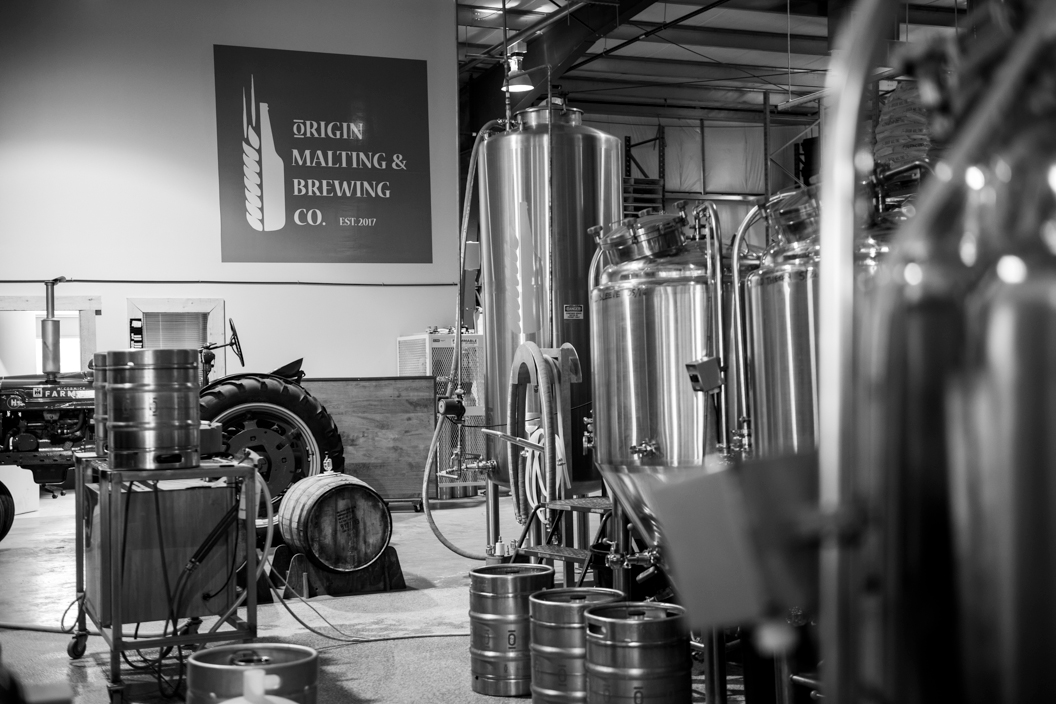
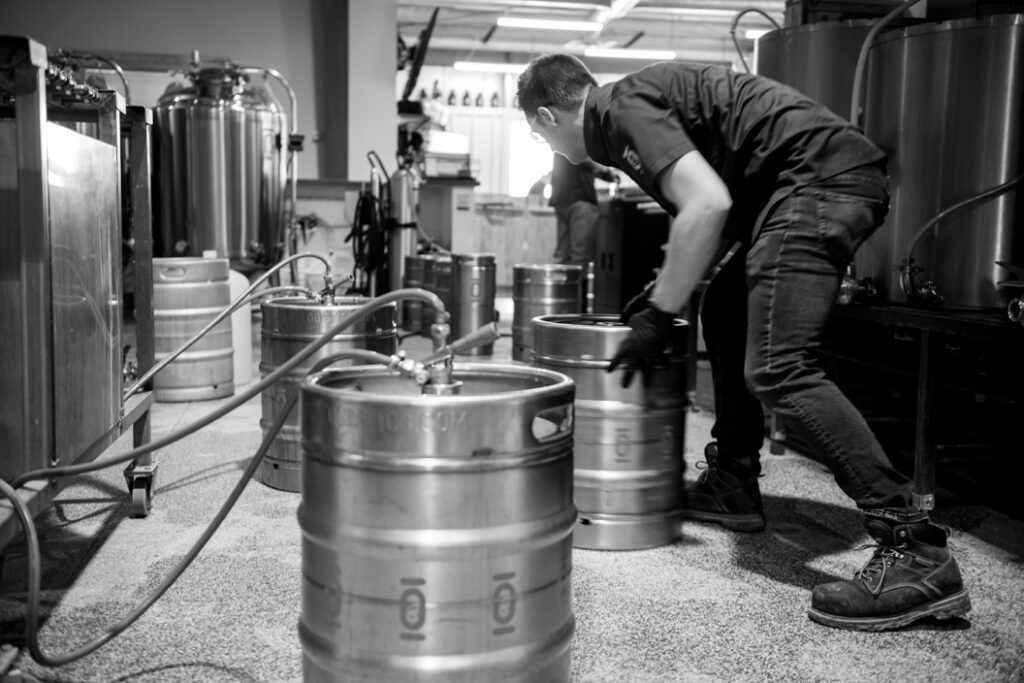
The Hilton family has farmed in southern Alberta for five generations. In 2017, they founded Origin Malting and Brewing in Strathmore. The Hiltons have a unique perspective on malting barley. They sell most of their harvest to one of the big maltsters. They also malt it for use by Origin and to supply approximately 40 additional craft breweries throughout Alberta. Origin beer is available for sale across the Prairies.
“Malting barley is one of the most relationship-based commodities we grow on our farm,” said Sterling Hilton, president of Origin. While the sale of wheat and canola is more transactional, said Hilton, with malting barley being such a fickle crop, it is important to maintain a good relationship with a buyer. By demonstrating a high rate of success year over year, buyers will work with farmers in tough crop years, either altering or deferring tonnage requirements, softening quality metrics or otherwise ensuring the barley has a home.
To this end, both Smith at RahrBSG and Dodd at Canada Malting advise farmers to contract their malting barley. “Farmers under contract have more flexibility,” said Smith. “Outside of contracts, purchasers in the spot market will be much more selective.” And in years such as 2025, when everyone experienced a high quality bumper crop, maltsters hold the bargaining chips. Of course, with market uncertainty, the maltsters may contract for smaller individual quantities of barley. Nonetheless, Smith suggests farmers can negotiate to sign a longer-term contract.
Dodd agrees and adds that it is even possible to negotiate a contract for tonnage without locking in a price. “The contract just ensures your malt barley has a home,” he said.
In response to possible impact from the downturn in beer sales, farmers may also consider sowing newer malting barley varieties that have better agronomic characteristics. For years, AC Metcalfe, CDC Copeland and AAC Synergy, first registered in 1997, 1999 and 2012 respectively, have been the buyers’ preferred varieties, not necessarily to the benefit of the farmer. This may finally change, owing to acceptance by brewers, and therefore maltsters, of new varieties.
On the Hilton farm, malting barley seeded in 2025 was two-thirds CDC Copeland and one-third CDC Churchill, first registered in 2018. In 2026, the plan is to reverse these proportions. In 2027, they intend to exclusively seed CDC Churchill. The Hiltons have consulted with their buyer and face no resistance.
In part, this change in buyer acceptance is thanks to the work of the Canadian Malting Barley Technical Centre (CMBTC) in Winnipeg, MB. In addition to testing the malting characteristics of barley and measuring the composition and performance of the resulting malt in the brewhouse, the CMBTC uses the data it generates to identify markets for new barley varieties. This is important because not all markets have seen a slump in beer sales. If North American brewers make less beer and use less malt, perhaps other markets can pick up some of the slack.
CDC Churchill is the first malting barley variety to have an edge over AAC Synergy, said Peter Watts, CMBTC managing director. Its improved agronomics can help lessen the sting of a tougher market. As important, the CMBTC works with large international brewers, primarily in China and Mexico, to ensure they will purchase this malting variety. Only when major breweries agree to use the variety will the maltsters purchase the barley from farmers who grow it. “We seek approval for these new varieties of barley so they have the greatest chance for success,” said Watts.
Despite headwinds in the beer market, all parties are cautiously optimistic. While barley acreage in Alberta has been on a steady decline since the mid-’90s, farmers will continue to grow substantial acreage. In many global markets, Alberta malting barley is reputed to be the best.
Hilton will not reduce acreage and points out that, of the farm’s crops, barley is least exposed to political whims. “All world commodities have uncertainties,” he said. “At least with barley, we are dealing with buyers and processors domestically. Barley has had relatively steady pricing while canola prices, for example, have been all over the map.”
IT’S NOT ALL BAD NEWS
Alberta’s craft beer segment is growing. “We actually see hectolitres very slightly increasing and market share increasing,” said Blair Berdusco, executive director of the Alberta Small Brewers Association. Craft brewers use more malt per litre of beer brewed than do the big players. Most beer brewed by Alberta’s small brewers is made with locally grown and malted barley. The exception is small amounts of imported specialty malts. Typically, Alberta craft brewers use barley malted in Alberta by RahrBSG, Canada Malting or one of a handful of micro-maltsters such as Origin. “When you support a local brewer, you support much more than that one business,” said Berdusco.
“Drink more beer and encourage your friends to drink more beer,” suggested Smith, only half in jest. “Beer brings people together.”
Comments