


AG PLASTICS RECYCLING PILOT EXTENDED
BY IAN DOIG • PHOTO COURTESY OF CLEANFARMS
In July, the Alberta government announced the intended launch of a permanent farm plastics recycling program but has instead renewed the province’s existing pilot project. The “Alberta Ag-Plastic. Recycle It!” pilot program will start its next two-year stretch in 2026 with an impressive record.
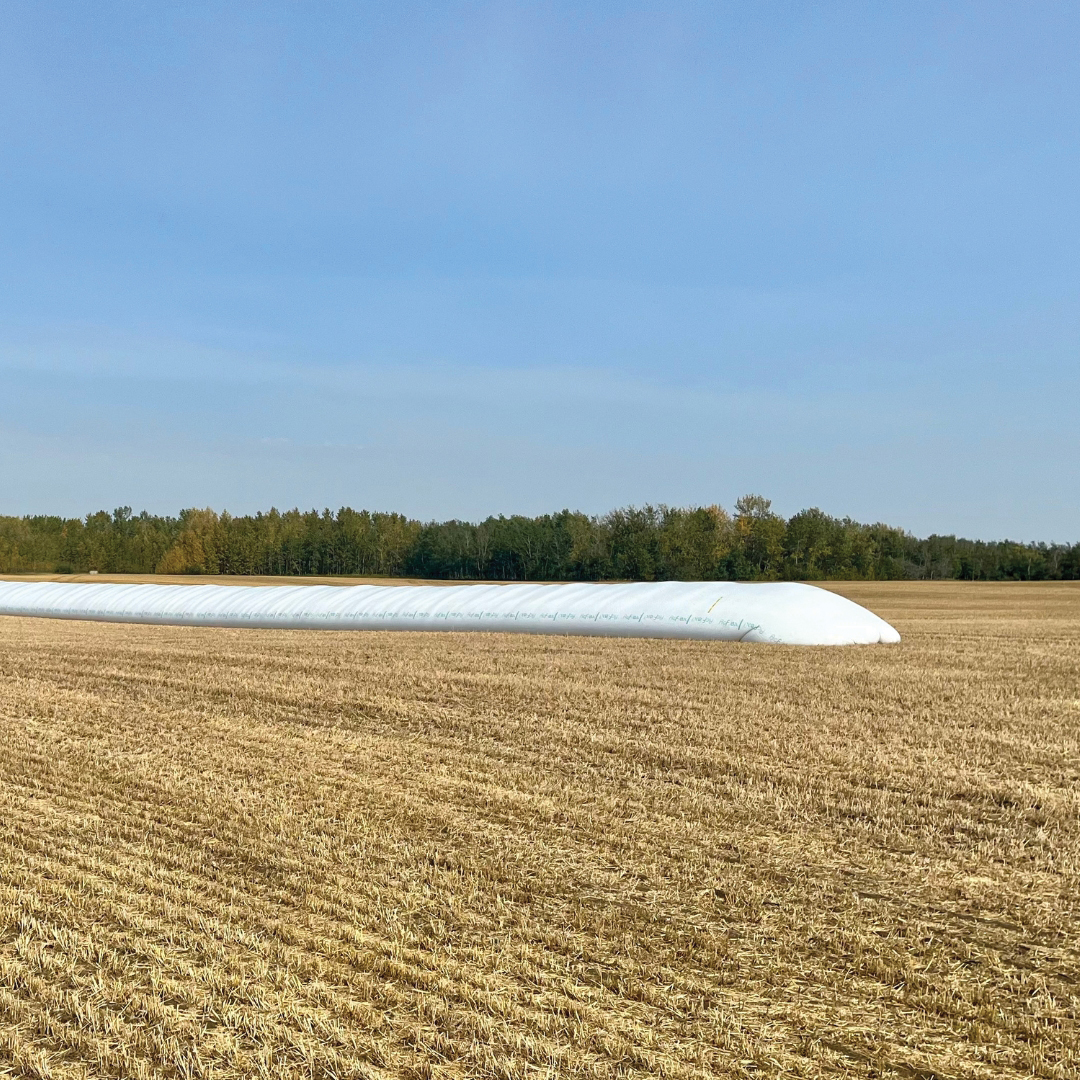
Recycle It! is led by the Agricultural Plastics Recycling Group. Funds are granted by the Government of Alberta and administered by Alberta Beef Producers. The initiative is operated by Cleanfarms, a national ag plastics recycling organization. Collections launched in October 2019, and by Sept. 30, 2025, the pilot collected 4,160 tonnes of grain bags, 667 tonnes of twine and 110 tonnes of additional waste materials for recycling. It also established 53 collection partners that operate 173 collection sites.
Nationally, Cleanfarms’ recycling record is similarly impressive. The organization celebrated its 15th anniversary in February 2025, with 97 million kilograms of Canadian farm plastics recycled and the establishment of 1,500 active farm plastic recycling sites.
For approximately the decade prior to the formation of Cleanfarms, some of its recycling programs had been operated by CropLife Canada. When Cleanfarms took over a previously existing small container recycling program launched in Alberta, its collection rate was 65 per cent. Fourteen years on, the national collection rate for 10-litre HDPE containers is almost 90 per cent, which is unheard outside of beverage deposit programs.
“All of this has been achieved by farmers voluntarily,” said Shane Hedderson, western director of Cleanfarms. “They are the original stewards of the land, and they want to do this. We’ve proven farmers will use accessible, convenient, easy-to-use programs.”
Inspired by the 2018 launch of Saskatchewan’s first extended producer responsibility (EPR) regulation for grain bags, Cleanfarms was designated as program operator under Recycle It! for Alberta grain bag recycling. Such EPR programs see the corporate manufacturer of a plastic agricultural product foot the bill. “It’s been six years of constant learning,” said Hedderson. “The municipalities saw the need for this program, and there was huge uptake by farmers. Farmers want a good, environmentally responsible way to get rid of grain bags.” The approximately 5,000 tonnes the pilot collected is the equivalent of 300 transport trucks of grain bags and twine diverted from landfill and burn piles, noted Hedderson. Prior to the pilot’s launch, grain bags had been exported for recycling. All grain bags collected in Alberta and Saskatchewan are now recycled by Merlin Plastics in Bassano and Revolution Sustainable Solutions in Bashaw.
“We’ve found the most successful EPR programs always start with a pilot where we can learn the logistics, the costs, all the players [such as trucking companies] and the farmers,” said Hedderson. “We get out all the kinks and roll right into it. It’s almost a seamless transition into a permanent EPR program.”
When the pilot concludes in two years, the part Cleanfarms may play in Alberta’s ag plastics recycling program depends on the type of system the government ultimately chooses. Hedderson believes the organization would be a logical choice to operate this if an EPR model is chosen.
According to a statement from the ministry, the permanent approach may include EPR or stewardship, which can involve the use of consumer fees. “Either could be considered to manage ag plastics waste, or another regulatory approach could be developed,” it noted. The pilot extension will allow its expansion to include collection of silage plastic and bale wrap.

Comments