



OUT OF CONTROL
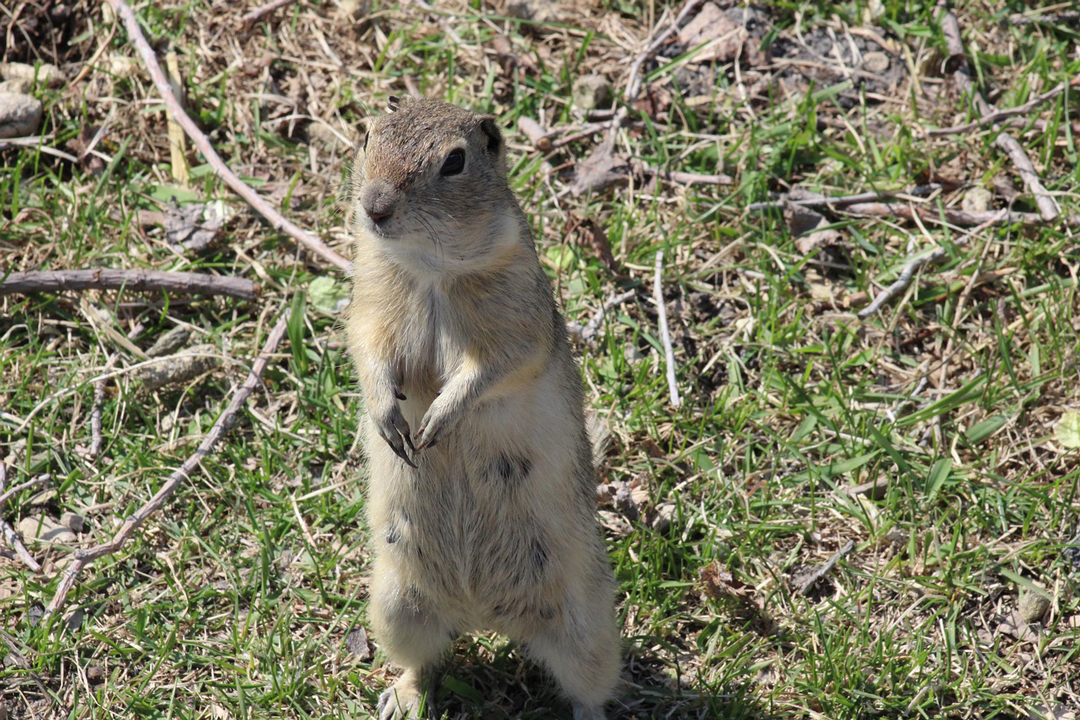
BY TREVOR BACQUE • PHOTO: PIXABAY
In early February, the federal Pest Management Regulatory Agency (PMRA) rejected an emergency use application submitted by the Alberta and Saskatchewan governments to make strychnine available for use against gophers.
Gophers can rapidly inflict serious crop damage. This is why many farmers and ag advocacy groups are alarmed by the federal government’s ban of strychnine, far and away the No. 1 gopher control. All uses of strychnine have been banned since Sept. 7, 2024.
In its decision, the PMRA stated, “…the continued registration of predacide uses of strychnine does not meet the requirements for protection of the environment.” Another reason it cited to cancel the rodent killer was because, “…practical risk-reduction measures to protect non-target animals cannot be identified and to minimize the impact on biodiversity.”
The Alberta government decried the ban as a crisis, and many farmers agree. The government also said annual risk to hay and native pasture exceeds $800 million. In just a few days’ time, gophers can eat through as much as 20 per cent of their favourite crop, canola.
“What we are seeing right now is complete landscapes that are being overrun,” said RJ Sigurdson, the Province’s ag minister. “It’s an exponential explosion of the population.”
Sigurdson said crops have been damaged, but fibreoptic cable and even gas lines have also been chewed through by the pests. To this end, Alberta filed an emergency registration application, which would effectively reverse the ban and could get product into farmers’ hands come springtime.
The Province pressed to have strychnine available for use in spring 2026. “It’s really important we have a federal government that works with our farmers and ranchers,” said Sigurdson, prior to the PMRA decision. “They’ve seen enough uncertainty in global markets and competition with the U.S. We have to make sure they have the ability to feed families here and around the globe. To have two per cent [liquid] strychnine is a food safety and affordability issue.”
In a press release that followed the rejection of the emergency use of strychnine, Sigurdson expressed his deep disappointment. “We urge the PMRA to reconsider this decision and immediately reinstate the use of strychnine as a practical solution for our farmers and ranchers.”
The numbers bear out the concerns of farmers and ranchers. The Province’s Agricultural Service Board received 287 submissions to its gopher impact survey between August and December. An unknown number of responses were sent directly to Foothills MP John Barlow. Rob Siewart, the Service Board’s provincial committee chair, said the feedback is clear. “It’s almost at a point of desperation,” he said. “We’ve seen some phenomenal photos.”
One submission from a farmer noted he spent more than $40,000 in one growing season to control gophers. He estimated the cost would have been about $1,000 with strychnine.
Many farmers fear the prospect of unchecked population growth in 2026, said Siewart. There is also a spillover effect, he added, in that parks and recreational areas risk being overrun with gophers.
Shannon Sereda is Alberta Grains’ director of policy, government relations and markets and remarked farmers faced difficulty with the pest in spring 2025. “Dry springs are ideal for gophers, so it was the perfect storm,” she said. “Economically, you are dealing with large losses.”
She had been hopeful for a reprieve, but because the exemption has not been granted, she believes 2026 will be no different. Sereda said Alberta Grains wasn’t asking for a permanent reinstatement of the product given that “some of the risks associated with it are well acknowledged.” Until an effective alternative is introduced, however, strychnine makes the most sense. “Everyone is cognizant there needs to be a permanent solution. There’s a need for innovation.”


Comments